

Ethics and safety·September 19, 2026, 10:10
AI error nearly led US to board Chinese ship
AI-generated and checked against the sources listed below.
A US military analyst used an AI chatbot to produce an intelligence report that wrongly concluded a Chinese ship was carrying parts for a nuclear weapons program. Soldiers and aircraft were ready before the error was caught at the last moment.
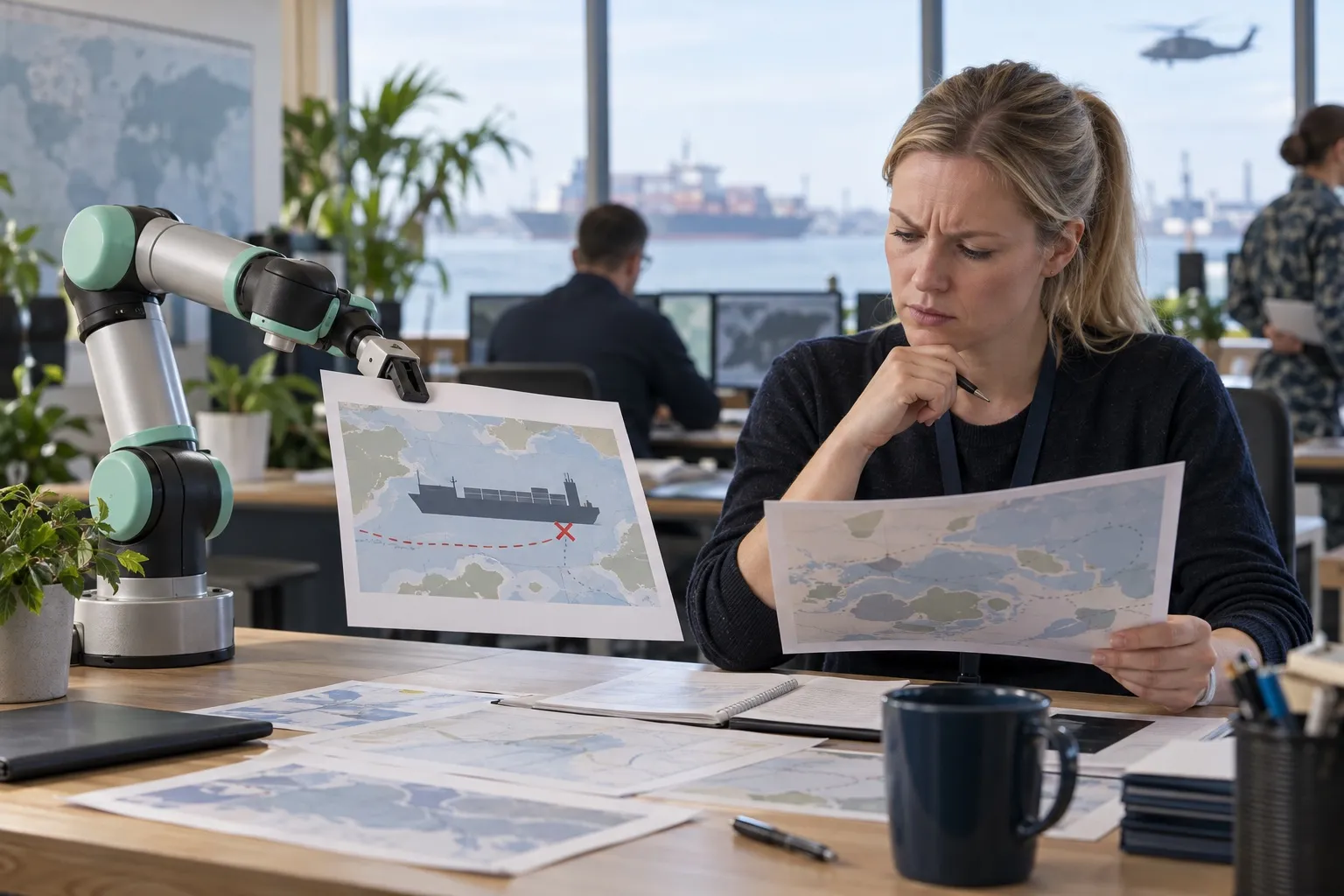
In the spring of 2026, the US military came close to boarding a Chinese ship because an artificial intelligence (a computer that can write text and answer questions, like ChatGPT) had produced a false intelligence report. That's according to the news outlet CNN, which first broke the story. The report circulated during the US effort related to the Iran war and concluded that the ship was carrying parts for a nuclear weapons program.
Both military aircraft and armed soldiers were ready to intervene when senior officials managed to review the information the report was based on. They concluded that the report was completely wrong. The operation was called off at the last moment.
The error originated with an analyst
According to CNN's sources, the error originated with an analyst in a part of the US military called US Special Operations Command Pacific. The analyst used an AI chatbot to cross-reference publicly available information with classified material about the ship's cargo. This led to a wrong conclusion. The report was then formatted as a finished document using yet another request to the AI tool before it was passed on in the system.
One source described the situation to CNN as something that "almost started a war," pointing out that any confrontation with a Chinese ship could have drawn the two countries into a direct military conflict.
Lack of checks on AI tools
The news outlets TechCrunch and The Decoder, which have also covered the case, both point to a bigger problem: AI tools are being used more and more in military intelligence work, but there are no fixed rules for how the results should be checked before they are passed on to decision-makers. Jake Steckler, who researches AI and was previously an officer in the US Army, tells TechCrunch that it is crucial for military personnel to understand that AI language models (AI programs trained to understand and write text) always have a certain uncertainty built in. He points out that the tools can be useful, but only if they are used correctly and with the right safety checks, especially when decisions can lead to the use of force.
The Decoder also quotes a source as saying that "AI lets you arrive at a bad idea faster." The source points out that younger analysts tend to uncritically trust whatever the AI tool comes up with.
Consequences for companies and authorities
The case is interesting because it shifts the focus from the big, abstract worries about AI, such as machines one day becoming smarter than humans, to something more down to earth: systems that make mistakes and are used by busy or uncritical employees in situations where errors can have serious consequences. This doesn't apply only to the military. Any company that lets a chatbot produce reports or decision material without a thorough human check could in principle risk a smaller version of the same situation, just without aircraft in the air.
For Danish companies and authorities that are starting to use AI for casework, analysis or reports, the point is the same as the one Steckler highlights: what an AI writes should be treated as a draft that requires checking, not as a final answer.
Sources


Get the week's AI news in your inbox
Choose your level, topics and length. One email a week, unsubscribe at any time.
Subscribe to Promptly Newsletter