

Ethics and safety·September 27, 2026, 20:32
Cisco: AI agents already run real networks
AI-generated and checked against the sources listed below.
A new study from Cisco and Omdia shows that more than half of companies already let AI agents make changes to their real networks. However, a lack of trust still limits how much they are allowed to do on their own.
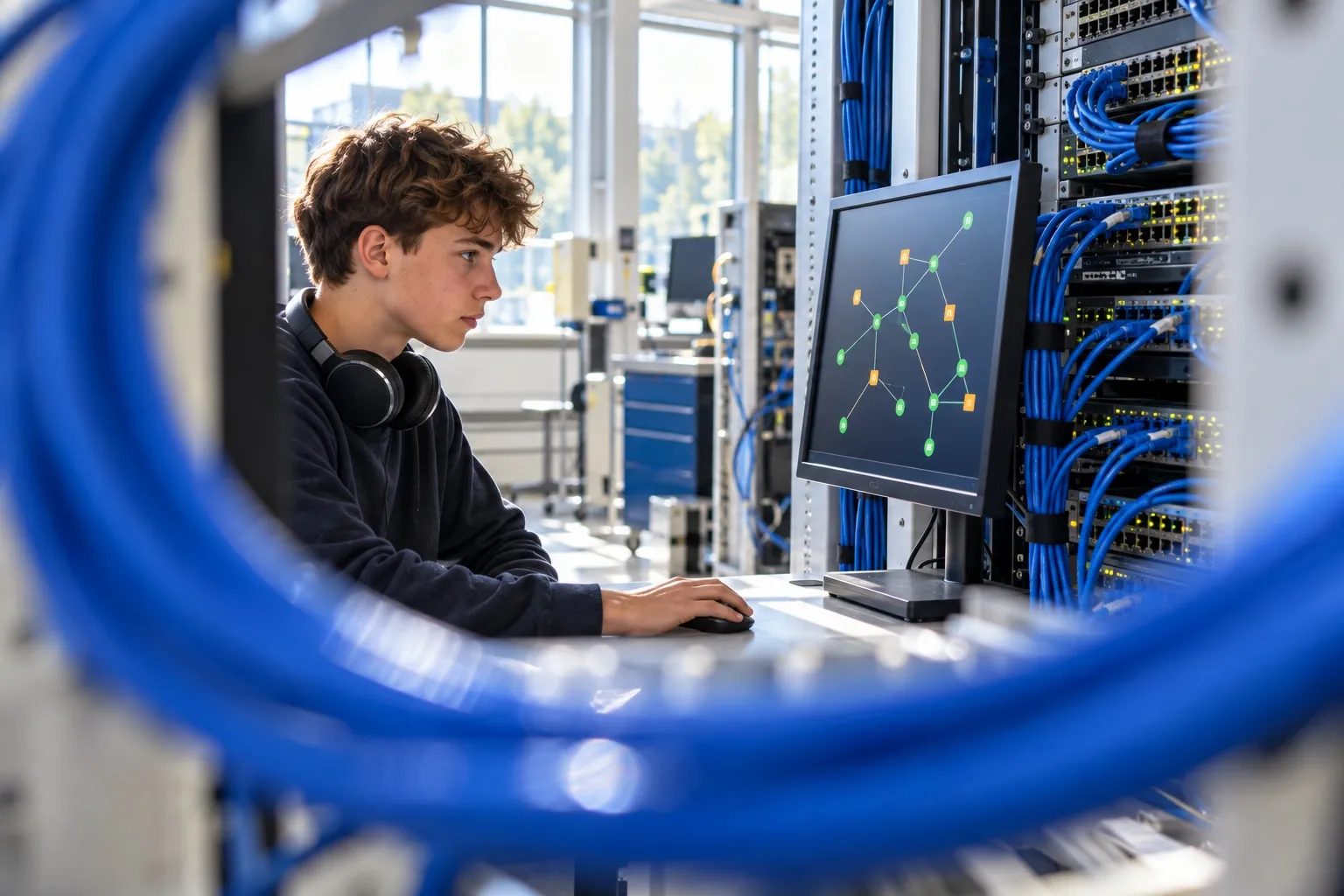
An AI agent is a program that can act and make decisions on its own without a human controlling every step. A new study from Cisco and the research firm Omdia shows that such agents are already running real IT networks at more than half of the companies surveyed.
82 percent of the companies say they are comfortable with an AI agent making at least some changes to the network before a human approves them. 51 percent are already running AI agents that act directly in their production systems, meaning the systems the company uses day to day. A full 84 percent expect AI to run operations within a year.
The study is based on responses from 1,000 IT and network leaders at companies with at least 500 employees in three regions. The figures thus show what the companies report and are willing to do, not how well the AI systems actually work in practice.
Why companies choose AI
The report shows that organizations on average receive around 4,100 alerts and incidents a day, more than half of which concern the network. It would take around 100 specialists to handle that pile manually.
Almost half of the alerts are closed before anyone has time to investigate them, and 57 percent say their workflows cannot keep up with the necessary changes. That is one of the main reasons companies are willing to hand tasks over to AI agents.
Network operations have the advantage that you can often quickly see whether a change works and undo it again. If an agent, for example, reroutes traffic to solve a problem, staff can check the result and roll it back if it doesn't work.
Where to draw the line on autonomy
Joe Vaccaro, a senior executive at Cisco responsible for networking platforms, believes this very ability to test and undo should determine how much freedom an AI agent gets.
He points out that machines are increasingly communicating with each other over the network as AI agents fetch data and contact other systems. This means the network itself becomes part of the infrastructure the AI depends on, and a delay in the network can affect what information an agent receives and therefore what it decides to do.
According to Vaccaro, there is no single fixed limit on what AI agents may do. Instead, companies should assess how serious the consequences are if something goes wrong, whether the result is predictable, and how quickly the action can be undone.
An example: If an agent can show documentation of a problem and acts within the company's rules, it can reroute traffic on its own, and afterward check whether it worked and undo it if not. On the other hand, larger changes that affect the entire network architecture, or changes to security policies, require much more human control, because the consequences can spread further and be harder to roll back.
The study confirms this picture: 69 percent of companies require an explanation when an AI agent acts. For 36 percent, the minimum requirement is full insight into what the agent has done, plus a subsequent review of the action.
Cisco has also measured that direct traffic between AI systems doubles roughly every six months. Separate tests from the company show that tasks carried out by AI agents can create up to 450 percent more total network traffic than normal.
Source



Get the week's AI news in your inbox
Choose your level, topics and length. One email a week, unsubscribe at any time.
Subscribe to Promptly Newsletter