Deepseek reaches for Huawei's chips with free tools
Chinese AI company Deepseek has released six free software components for Huawei's Ascend chips. It could make it easier to use something other than Nvidia's chips.
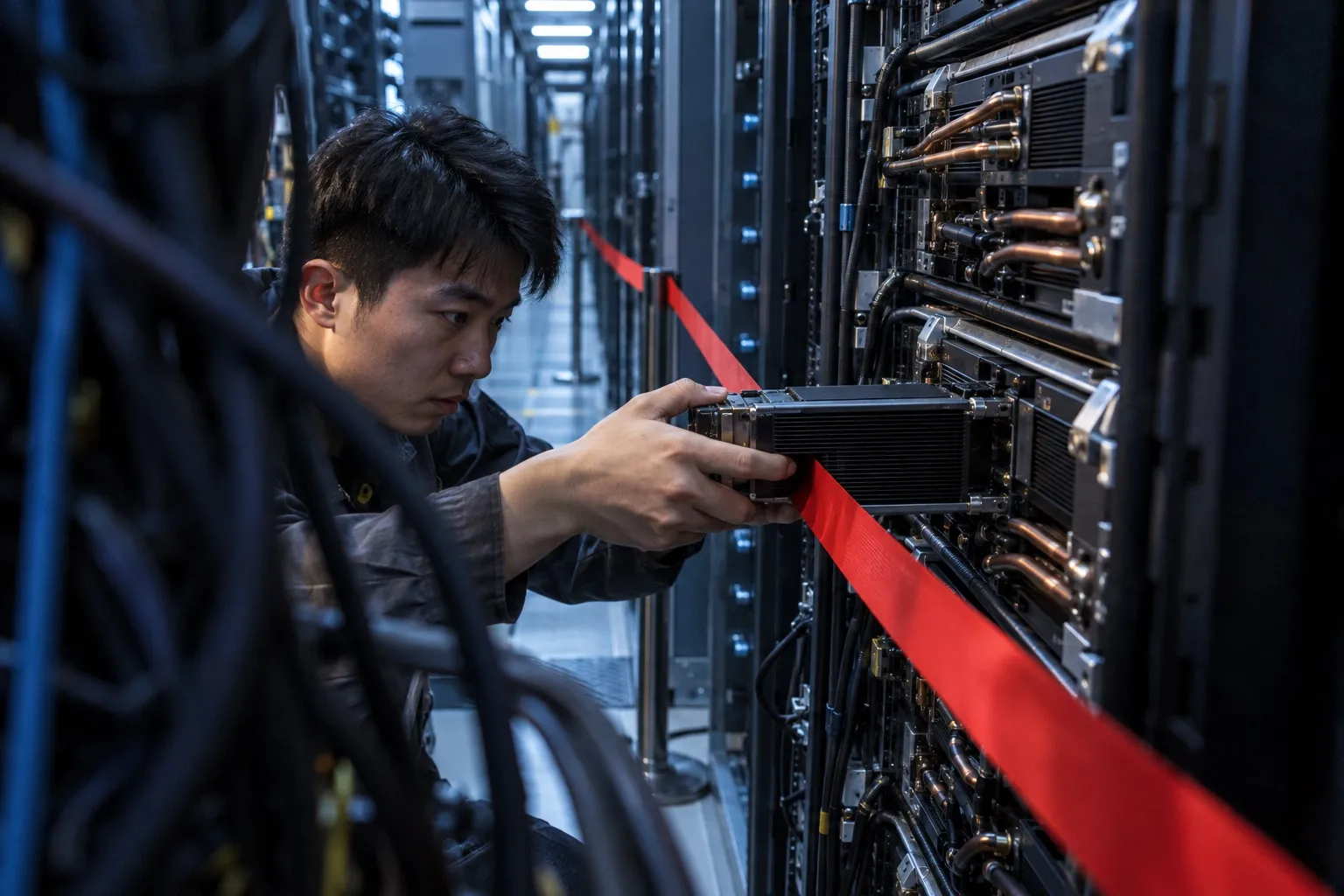
Chinese AI company Deepseek released six open source software components on September 30, 2026, aimed at Huawei's Ascend chips. Open source means the code is freely available to others. The announcement came via WeChat.
The release includes computation and communication libraries, meaning collections of ready-made code that developers can build on. It also includes the programming language TileLang, which Deepseek describes as a simpler programming model than Nvidia's CUDA. Deepseek originally tested TileLang on older Nvidia chips.
An alternative to Nvidia's dominance
CUDA is Nvidia's software platform and has around four million developers. That is part of the reason Nvidia is so strong. According to Techzine, Deepseek's tools transfer technology the company previously developed for Nvidia hardware to Huawei's platform. The goal is to make developers less dependent on a single supplier of AI chips.
Deepseek and Huawei have also jointly built a so-called supernode system with 128 Ascend 950 processors, in which computation and communication between chips are optimized.
Deepseek says of its ambition: "To build a new, independent and self-governed GPU software ecosystem, the first step is to get a universal high-level language that is easy to program in and can still exploit the hardware's full performance."
Big plans for a data center
According to Bloomberg, as relayed by AI Weekly, Deepseek plans to deploy at least 160,000 Huawei Ascend 950DT chips in a data center in Ulanqab in Inner Mongolia. The capacity is around 1 GW. The goal is for part of the capacity to be operational by the end of 2027 or the beginning of 2028. The rollout is split between its own and leased infrastructure.
According to the report, the chips are to be used for inference, meaning running finished models, and not for training them. This is described as an unusual choice, because the chip is designed for training. No prices, financing or power supply have been disclosed, and delivery depends on Huawei's production capacity and yield.
Background: export controls and backlash
U.S. export controls limit Chinese companies' access to Nvidia's most advanced chips. That creates pressure to use domestic alternatives. The Next Web reported in April that Deepseek was preparing to launch its V4 model optimized for Huawei's Ascend 950PR instead of CUDA.
Nvidia CEO Jensen Huang warned in a podcast, according to The Next Web: If AI models are optimized for Chinese standards rather than American technology, China will become superior to us.
The Next Web estimates that Huawei chips deliver around 60 percent of the Nvidia H100's performance in inference, and that the gap can be overcome with software, talent and energy. The outlet also writes that export controls are inadvertently accelerating Chinese alternatives.
Updated 12 October 2026: The article has been rewritten from additional sources.
Read also


