

How-to·October 15, 2025, 02:00
Google's AI video model Veo 3.1: Here's what it costs per second of video
AI-generated from the sources listed, with automated source checks.
Google's video model Veo 3.1 creates short clips with audio from text or images and is available to developers through the Gemini API. Pricing ranges from $0.05 to $0.60 per second depending on variant and resolution.
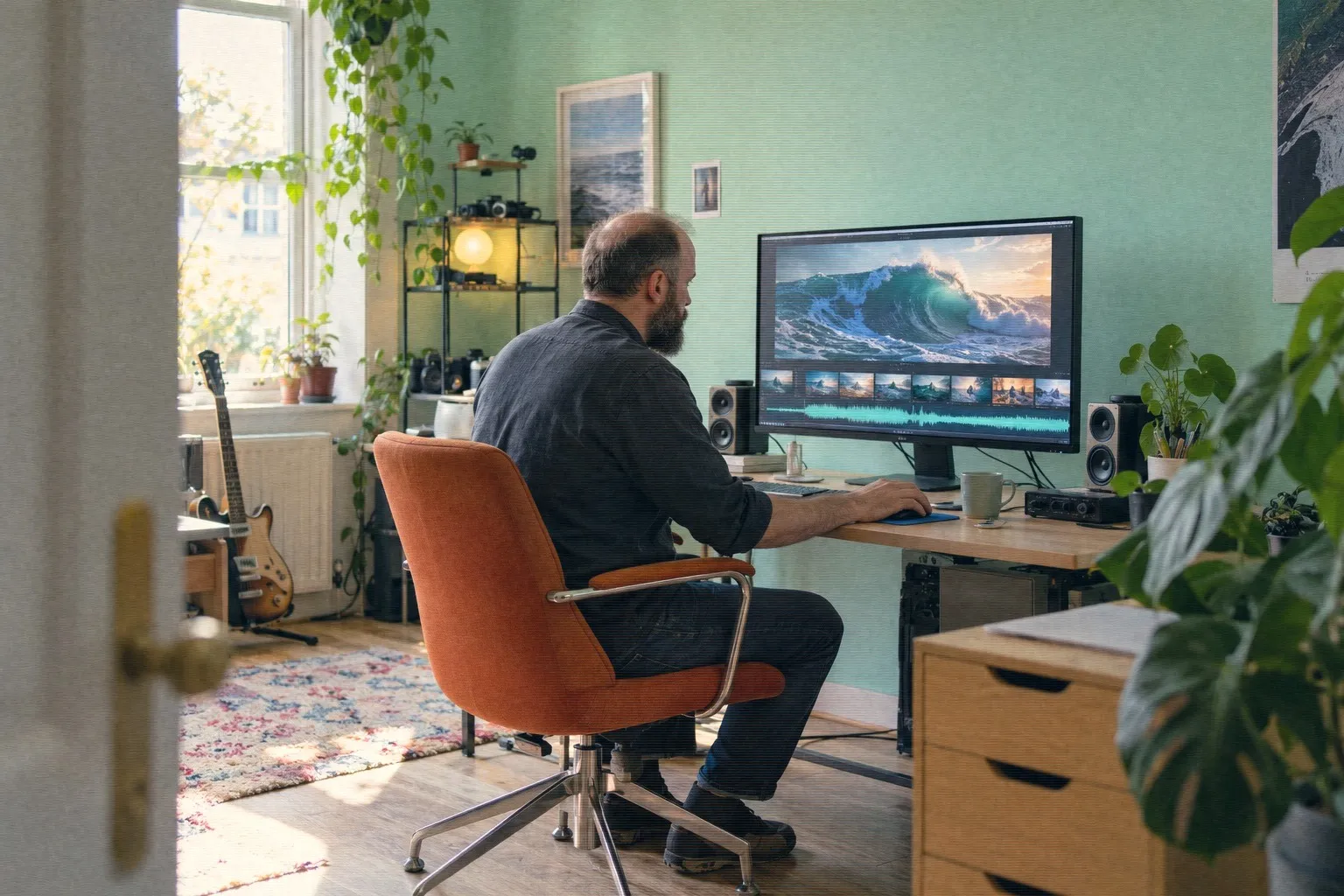
Google released Veo 3.1 and a faster version, Veo 3.1 Fast, as a paid preview in the Gemini API on October 15, 2025. That means developers can build AI-generated video into their own services. The models are also available in the Gemini app and in the Flow tool.
According to Google, Veo 3.1 delivers richer native audio, from conversations to synchronized sound effects. Google also highlights better control over narrative and cinematic style, as well as improved image-to-video, where the model follows prompts more closely and keeps people and characters more consistent from frame to frame. These are Google's own assessments.
New features
With "Ingredients to video," users can provide up to three reference images of a person, an object or a scene. Scene extension creates new clips from the last second of the previous one. With first and last frame control, the model generates a transition between two images.
According to the documentation, videos can be 4, 6 or 8 seconds long, in 16:9 or 9:16 format and at 24 frames per second. Extension adds 7 seconds at a time and can be repeated up to 20 times, but only at 720p. Veo 3.1 and Fast support up to 4K, while a third variant, Lite, only goes up to 1080p.
What does it cost?
Prices are per second of video and include audio:
- Veo 3.1: USD 0.40 at 720p and 1080p, USD 0.60 at 4K - Veo 3.1 Fast: USD 0.10 (720p), USD 0.12 (1080p), USD 0.30 (4K) - Veo 3.1 Lite: USD 0.05 (720p) and USD 0.08 (1080p)
You are only charged for videos that are successfully generated, and the service requires a paid tier.
Limitations
Generation is asynchronous: You submit a request and then poll to check whether the video is done. According to the documentation, it takes from 11 seconds to 6 minutes. Videos are stored on Google's servers for 2 days and then deleted. They receive a SynthID watermark and are run through safety filters.
In the EU, the UK, Switzerland and the MENA region, only the allow_adult setting is permitted for people. Image-to-video and reference images require that setting.
All three variants are still listed as preview. Google's video page now also recommends Gemini Omni Flash as the default model alongside Veo 3.1. Specifications and quality claims come from Google itself.
Source
Found via https://tech-insider.org/


Get the week's AI news in your inbox
Choose your level, topics and length. One email a week, unsubscribe at any time.
Subscribe to Promptly Newsletter