

How-to·September 22, 2026, 20:33
Guide shows game masters how AI can create images for role-playing
AI-generated and checked against the sources listed below.
A new prompt guide explains how Dungeon Masters can use Google's AI image model Nano Banana Pro to create portraits, documents and maps for role-playing games such as Dungeons & Dragons.
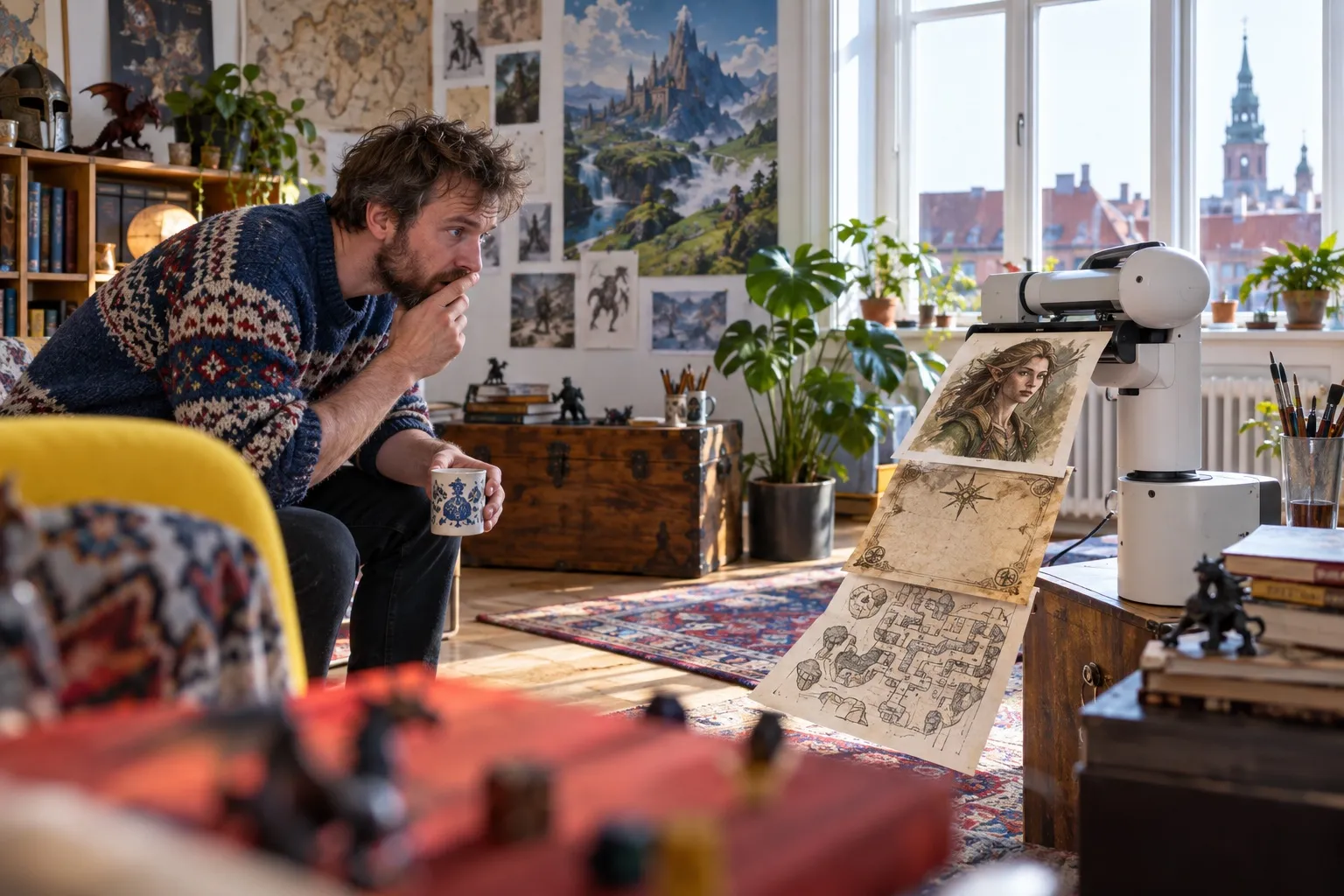
If you play role-playing games like Dungeons & Dragons, you may know the frustration of lacking a picture of that important NPC (non-player character, a character the game master controls) or a convincing map for the next battle. A new guide from the site Nerdbot shows how game masters can use Google's AI image model Nano Banana Pro for exactly that.
Nano Banana Pro is a further development of Google's Gemini image model, which came out in November 2025. It is good at keeping a face and a style consistent, even when you ask it to generate the same subject several times, and it delivers sharp images that can be printed in good quality.
The guide recommends first deciding on a fixed style for the entire campaign, that is, whether the images should look like paintings, comics or photos, before getting started. Otherwise, you easily end up with a messy character gallery where one figure looks like an oil painting and the next like an anime character.
For recurring NPCs, it is recommended to create a small set of reference images of the same person seen from the front and the side, so their appearance doesn't change from session to session. If you need a physical note for the players, a so-called handout, the guide suggests letting the AI make the paper itself with burned edges or stains, but writing the text yourself, as AI-generated lettering often comes out unclear or wrong.
For battle maps, the guide points out that the images should be taken straight from above with even lighting and a clear difference between floor, obstacles and dangerous areas, so players can quickly see where they can move. You should also generate the map without a grid, as AI models often make mistakes with straight lines, and instead add the grid afterward in the digital tabletop program you use.
The guide also reminds readers that you should not use AI to imitate named artists' styles without permission, or create images of other players' characters without asking first.
Sources

Get the week's AI news in your inbox
Choose your level, topics and length. One email a week, unsubscribe at any time.
Subscribe to Promptly Newsletter