

Updates·September 24, 2026, 14:16
Meta unveils Muse Charm: An AI tamagotchi
AI-generated and checked against the sources listed below.
On Wednesday evening, Mark Zuckerberg pulled a small gadget out of his pocket at the Meta Connect tech conference. The device is called Muse Charm and is meant to give access to Meta's AI assistant Muse without having to take out your phone, but neither a price nor a Danish launch is in place yet.
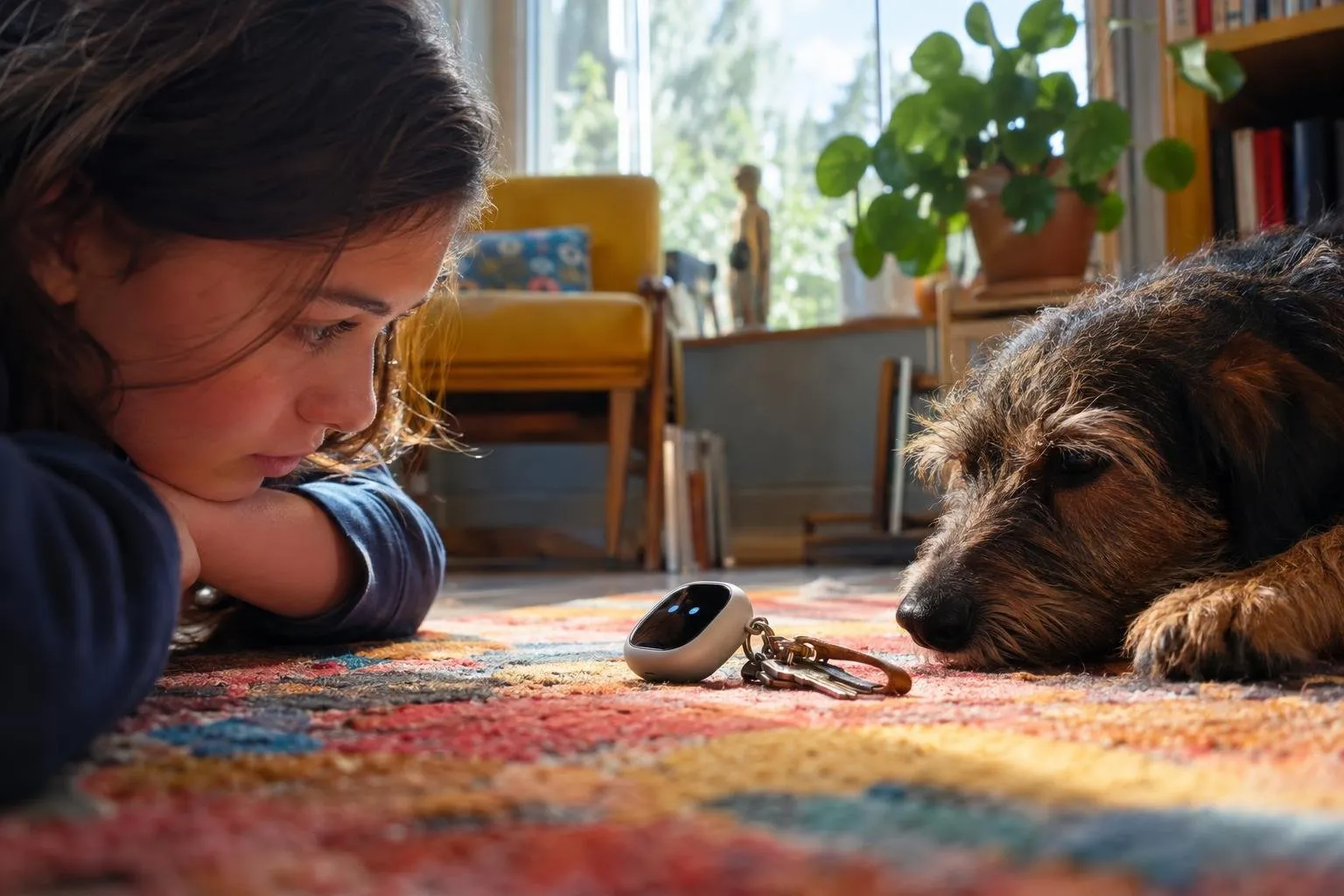
He didn't say "one more thing," but Meta CEO Mark Zuckerberg might as well have when he pulled a gadget out of his pocket as a surprise moment at the end of the Meta Connect technology conference on Wednesday evening.
The device is called Muse Charm and visually resembles a tamagotchi from the '90s: a small, palm-sized screen of about 2 inches in a semi-transparent housing where you can see the internal components. It can be worn on the wrist, carried in a pocket or hung on a keychain, and internally at Meta, employees have reportedly called the project "Clawmagochi."
According to several sources who have had the device in hand, Charm has built-in 5G so it works without Wi-Fi, a fingerprint sensor for unlocking, and cameras on both the front and back for photos and AI analysis. There are also speakers and microphones for music and voice conversations, and two devices can reportedly recognize and interact with each other when they are close together. Setup is done via the Muse app on iPhone or Android, and the device charges via USB-C.
Behind the screen is an avatar, not just a voice
The screen shows an animated figure representing the AI assistant Muse, which users can customize in appearance, clothing and voice. According to Zuckerberg, Meta has "packed the whole Muse experience, including real-time voice conversations and the avatar technology, into something that can sit on a keychain and is always ready to talk."
Behind the design are, among others, Alan Dye, former head of user interface design at Apple, and his former colleague Billy Sorrentino. The two were brought to Meta in late 2025 along with a string of other Apple designers. Meta CTO Andrew Bosworth has said the project was only officially started in March this year and that Meta originally aimed for a launch in 2027. Zuckerberg reportedly asked the team to speed up the plans after seeing early prototypes. "It's cool, it's fun, it's weird, it's different. There's nothing like it," Bosworth has said about the device.
Muse Charm is a physical gateway to Meta's AI agent Muse, which launched on September 8, 2026. Muse is not just a chatbot but is meant to carry out actual tasks such as reading and sending emails, booking travel, filling out web forms and making purchases on the user's behalf. There is a free version with up to 100 million tokens per week, while heavier use costs either $20 or $100 per month. However, Muse is only available in the US to users over 18, and neither Muse nor Muse Charm is available in Denmark or the rest of Europe yet.
Meta has not set a price for the device itself, but according to people familiar with the plans, it will be in the same price range as a smartwatch. The company is still finalizing details such as mobile plans. Charm is scheduled to go on sale in December, well before Christmas, but without a price or a confirmed Danish launch, it is unclear when, or whether, Danish consumers will be able to buy it.
Others have tried before and failed
Meta is far from the first company to bet on a standalone AI box for your pocket, and the industry does not exactly have good experiences to build on. Last year, Humane launched its AI Pin, a small square device you could attach to your clothing, for $699 plus a mandatory data subscription. The company aimed to sell 100,000 units but ended up with about 10,000. In February 2025, Humane sold its assets to HP for $116 million, and the existing devices lost all functionality when the servers were shut down.
Rabbit, on the other hand, sold about 130,000 units of its handheld R1 after its launch at CES 2024, but half a year later only about 5,000 people were using the device daily, a weak usage rate relative to the number of units sold.
Both earlier attempts required users to carry yet another object around and learn a completely new way of talking to AI, often with slower responses than the phone could give. Meta is trying a different approach: Muse already exists as an app, on the web, on Mac and in WhatsApp, and the company is also pushing the assistant into its smart glasses. Charm thus does not become a new AI universe in itself, but yet another gateway to the Muse system that millions can already use via their phones.
For Danish AI users, the point is so far mostly a matter of principle. Meta clearly shows where the company wants to go with its AI push: away from the screen and out into a physical, always-on device you carry with you. But without a price, without final specifications and without a confirmed Danish launch, Muse Charm is for now mostly a signaled direction, not a product you can put in your cart in this country.
What this means for you
Right now, you don't need to do anything: Muse Charm cannot be bought or used in Denmark yet. If you are curious about Meta's AI assistant Muse, you can instead keep an eye on whether it comes to Europe. If you want to try AI assistants that carry out tasks for you, such as booking travel or writing emails, there are already other options on the market you can try now.
Sources



Get the week's AI news in your inbox
Choose your level, topics and length. One email a week, unsubscribe at any time.
Subscribe to Promptly Newsletter