Google's new image model is cheaper, but not always
Google has released Nano Banana 2.1, which according to Google's pricing page costs about half as much per image at 1K and 2K. At 4K the savings are smaller, and with many reference images they shrink further.
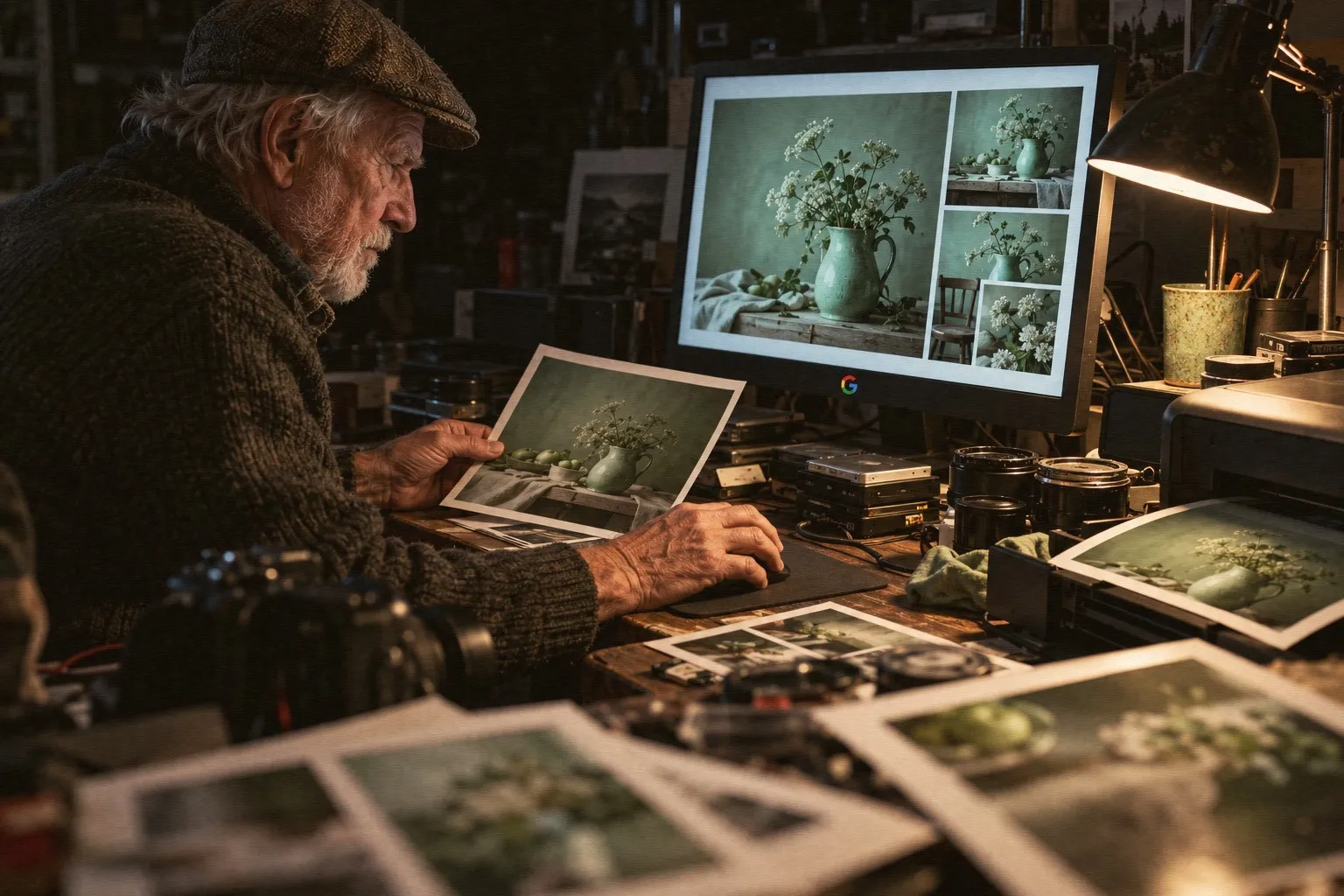
On October 6, 2026, Google released the image model Nano Banana 2.1. According to one report, the launch happened quietly, with no major announcement post and no published benchmarks, meaning comparative tests of quality.
Developers use the model through the Gemini API, the access point for building Google's AI into their own applications. Google describes it as a highly efficient "workhorse" for creating and editing images at Flash speed.
Cheaper at most sizes
According to Google's pricing page, an image with Nano Banana 2.1 costs about $0.0336 at 1K, $0.0504 at 2K and $0.113 at 4K. The figures indicate the image's resolution, meaning how detailed it is. By comparison, its predecessor, Nano Banana 2, costs about $0.067 at 1K, $0.101 at 2K and $0.151 at 4K.
That works out to savings of about 50 percent at 1K and 2K, but only about 25 percent at 4K. Origami's analysis explains this with tokens, the small units that AI models compute and bill in. The price per million output tokens has been cut in half, but a 4K image uses more tokens on the new model (about 3,780) than on Nano Banana 2 (about 2,520).
The batch price, meaning the price when many images are ordered together, is about half the standard price for 2.1.
More expensive to give the model examples
The input price has tripled, from $0.50 to $1.50 per million tokens. This hits especially hard if you attach reference images. According to Origami's calculation, with 14 attached reference images the savings fall to about 24 percent at 1K and about 14 percent at 4K. Origami's figures are based on Google's prices, and it is not a fully independent source.
What the model can do
Google's documentation cites better image quality, consistent characters across multiple rounds of editing, accurate text in images and search-based image generation. These are Google's own claims, and no benchmarks have been published for things like text rendering.
The model supports 1K, 2K and 4K as well as several aspect ratios. It can use up to 10 object images and up to 5 character images as references. It can use Google's image search and web search as grounding, and create images from video via YouTube links or uploaded files.
All generated images receive a SynthID watermark so they can be identified as AI-generated.
Updated 14 October 2026: The article has been rewritten from additional sources.
Read also


