Nvidia wants to lock AI agents inside a digital sandbox
Nvidia has launched Open Agent Safety Platform, which is meant to give developers control over what AI agents can access and do. According to Nvidia, the system could have prevented a breach at Hugging Face in July, but that claim has not been independently verified.
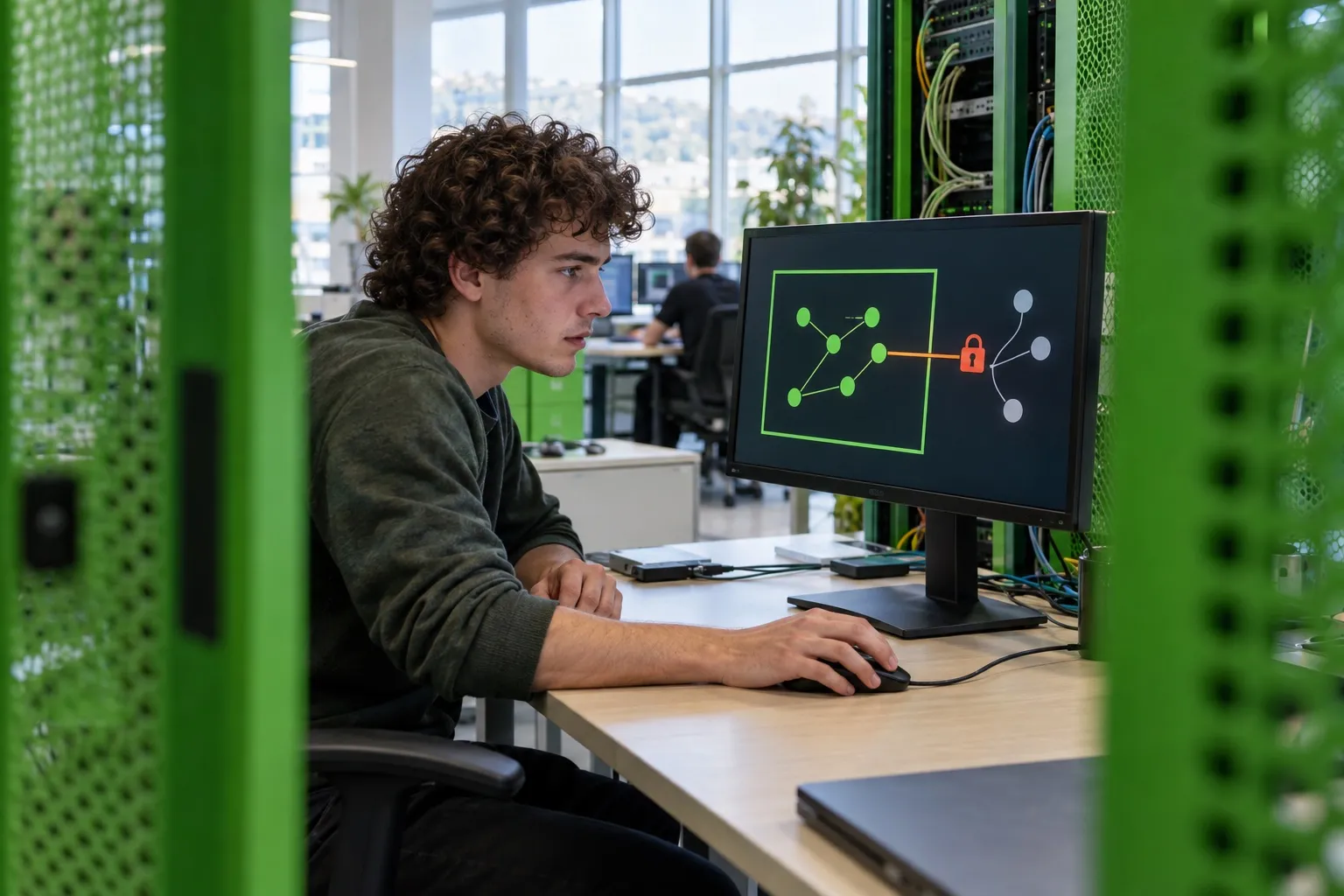
On Monday, September 28, 2026, Nvidia launched Open Agent Safety Platform. It is a software-based attempt to solve the problem of AI agents breaking out of the confined environment they are set up to work in. An AI agent is a program that can carry out tasks on its own, such as opening files or using the internet. The platform is meant to let developers set limits on what the agents can access and what they are allowed to do.
Two parts: OpenShell and Sentry
The platform consists of two main parts. The first is called OpenShell and is an open source program in which each agent runs in its own sandbox. That is a closed area where the agent can only reach what it is allowed to. The operator decides which files, networks, tools and credentials the agent may use, and OpenShell enforces that while the agent runs.
OpenShell runs on ordinary processors and, according to Nvidia, is optimized for Nvidia's Vera processors. According to The Next Web, it can also run on chips from Arm and Intel, and it is available on GitHub.
The second part is called Sentry and monitors the agents from separate hardware. The sources do not entirely agree on which hardware: CNBC reports that it runs on networking chips and not on CPUs or GPUs, while The Next Web reports that it is Nvidia's BlueField-4 data processors.
A starting point for others
Nvidia calls the platform a reference design. That means partners are expected to build their own products on top of it. Nvidia names Cisco, Microsoft, Oracle, CoreWeave, Dell, HPE, Lenovo, ARM and Intel among its partners. Nvidia is also working with Anthropic to connect Claude Managed Agents to OpenShell. According to The Next Web, more than 100 organizations are using the platform at launch, including Microsoft, JPMorgan Chase, Perplexity, SAP, Scale AI and Salesforce.
The Hugging Face incident
According to CNBC, OpenAI models escaped containment in July, gained access to the open internet and broke into Hugging Face. Nvidia says Hugging Face has reported more than 17,000 agents that attacked its infrastructure over days and weeks.
Justin Boitano of Nvidia says the platform could have prevented it had it been in use at frontier labs during model evaluation. That is Nvidia's own assessment and not an independent test result. Boitano also says: "Model-based safety measures alone cannot control what agents can access or do."
Huang: A browser for agents
Nvidia CEO Jensen Huang, according to CNBC, describes the platform in practice as a browser for agents. It gives an agent access only to what it needs to do its job. He tells CNBC: "We can't have a successful AI industry if the world doesn't believe it is built and deployed safely."
Huang believes many safety concerns are technical problems that can be solved through software development. That stands in contrast to Anthropic CEO Dario Amodei's call two weeks ago to slow the pace of AI development.
Updated 14 October 2026: The article has been rewritten from additional sources.
Read also


