

Breakthroughs and research·October 7, 2026, 17:36
OpenAI let new model take on 4,000 unsolved math problems
AI-generated and checked against the sources listed below.
OpenAI has published 722 mathematical manuscripts from an internal, as yet unreleased model that tackled around 4,000 open problems, but the results have not been peer reviewed.
What's new
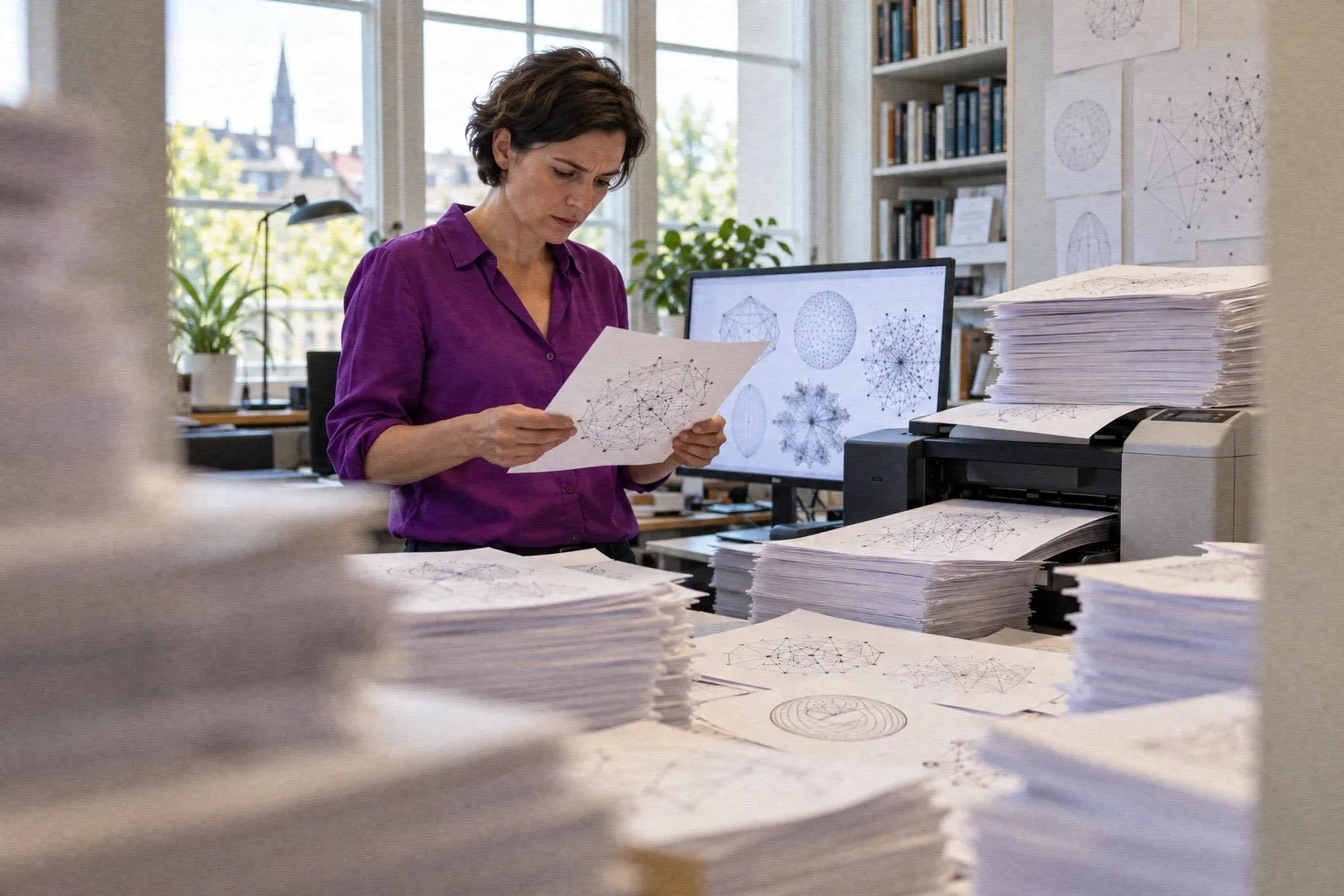
OpenAI has released a collection of mathematical results from an internal model that has not yet been released. The model was given about 4,000 open math problems, that is, tasks researchers have not been able to solve. The result is publicly available on GitHub: 722 manuscripts divided into 372 research families. They cover pure mathematics, theoretical computer science and mathematical physics.
It comes after OpenAI in September presented a result on the so-called Navier-Stokes equations, which describe motion in fluids. The company has also said that the model has solved more than 100 long-standing open problems. The model's name and a release date are not given in the sources I have found.
What's clever
Much of the work has been checked by a computer. Many proofs have been translated into Lean, a programming language in which a computer can verify that every step of a mathematical proof holds. That makes it easier to trust the results than with an ordinary text proof.
The pace is also remarkable. Each approved result cost on average about three hours of computing power equivalent to ChatGPT Pro. Examples include work on how closely the number pi can be approximated by fractions, and proofs that certain problems in complexity theory are extremely hard to solve.
OpenAI has also spoken with an advisory group on mathematics and artificial intelligence at the Institute for Advanced Study, and an independent and unpaid group is being set up to assess the significance of the results.
Cheaper or better?
It is not a product you can buy, so there is no price. The price has not been disclosed, and there is no direct comparison with Google or Anthropic in the sources I have seen.
Whether it is better is hard to say yet. Many manuscripts still lack a Lean version, and OpenAI itself says that some unformalized results may contain errors. Even computer verification does not automatically prove that the entire research claim is correct. The results have also not been peer reviewed, that is, examined by independent researchers. Mathematicians have also warned against using open problems as a kind of scoreboard for AI.
What it's good for
First and foremost, it shows that AI can now be used as a research assistant in mathematics and theoretical computer science. That is an area where AI was previously tested mostly on finished school exercises and competition problems.
For ordinary users and businesses, it changes nothing right now, because the model is internal. But this kind of capacity for long, precise reasoning may eventually benefit other areas, such as coding, cryptography and scientific research. That depends on whether the results hold up once researchers have reviewed them.
Sources



Get the week's AI news in your inbox
Choose your level, topics and length. One email a week, unsubscribe at any time.
Subscribe to Promptly Newsletter