

Breakthroughs and research·October 7, 2026, 01:46
OpenAI posts 377 new math results online and draws criticism
AI-generated and checked against the sources listed below.
OpenAI has published 377 new mathematical results from an internal AI model on GitHub. No outsiders have yet confirmed how big the breakthroughs are, and the release is drawing criticism.

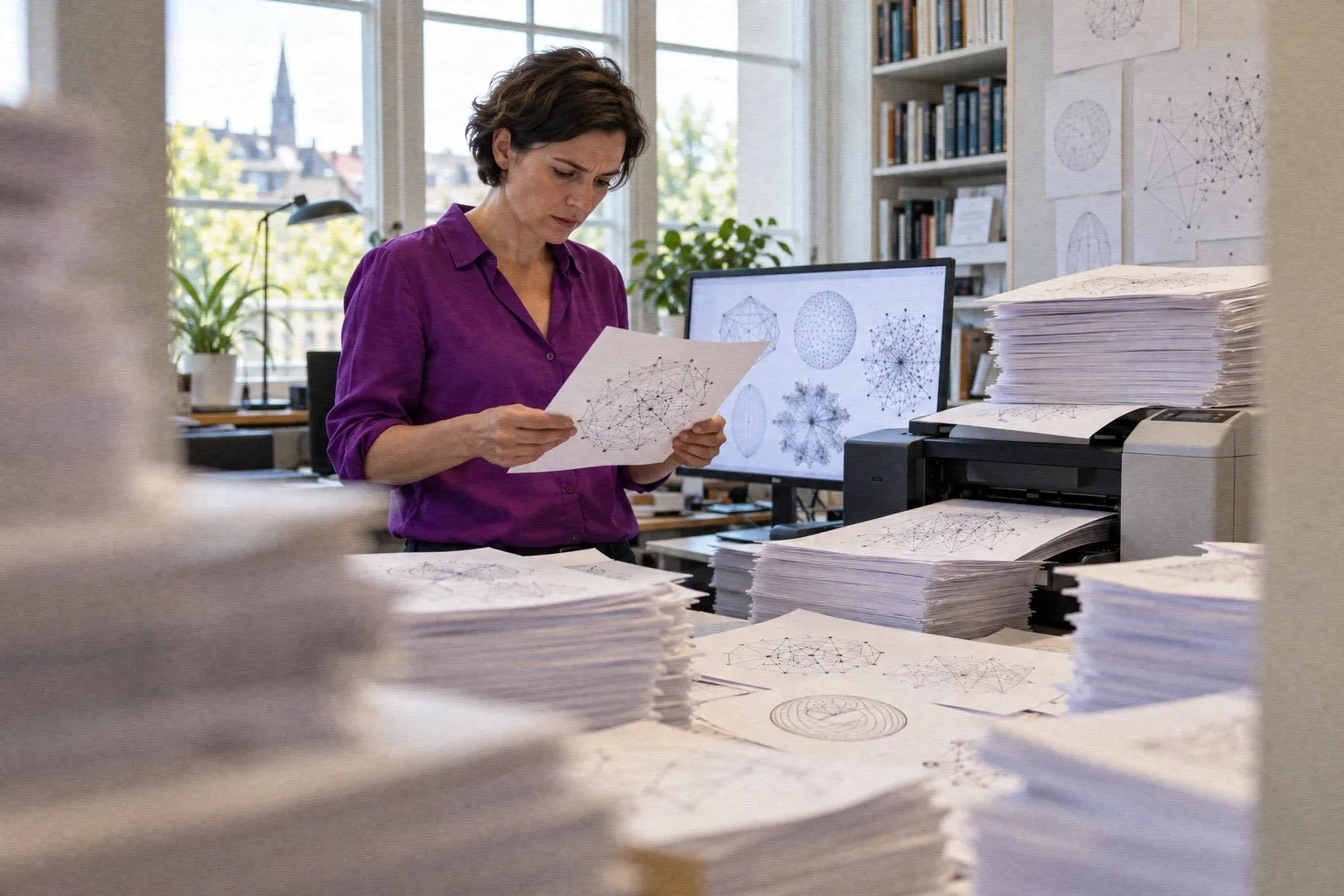
OpenAI has posted 377 new mathematical results on GitHub, a site where people share code and documents. The results come from an internal AI model that the company has not yet launched to the public.
One of the examples is a claimed proof of the full leading formula in the Birch-Swinnerton-Dyer conjecture. However, the proof only applies to a narrow type of so-called elliptic curves over the rational numbers and with specific properties. So it is not a proof of the entire conjecture.
Criticism of the approach
The release comes shortly after an advisory group on mathematics and AI at the Institute for Advanced Study in the US recommended that the major AI labs stop testing advanced mathematical problems on models that others do not have access to. That makes it hard for outsiders to check the work. Gizmodo writes that OpenAI appears to have disregarded the recommendation, because the internal model has not been released.
OpenAI itself says that the company wants to "directly give researchers the most advanced tools" and that it is working to release the model responsibly. A spokesperson says the company will "continue to incorporate feedback from experts and improve our standards for sharing major scientific advances".
What don't we know yet?
It is unclear how many of the 377 results are genuine breakthroughs and how many are minor or already known. Gizmodo's writer says openly that he cannot assess the results himself and that he will neither dismiss them nor hail them as 377 major breakthroughs.
Other media mention a larger collection of around 722 manuscripts, and that the model was set to work on about 4,000 open problems. The numbers vary between sources, so they should be taken with caution. It has also been reported that some of OpenAI's earlier math results in August had not properly credited previous work.
What does it mean for you?
For most people, the case has no direct significance in everyday life. But it shows that AI companies are increasingly competing to show that their models can contribute to new research and not just solve school exercises. At the same time, the question is how such claims can be trusted when others cannot test the model. That is the debate the release has now sharpened.
Sources


Get the week's AI news in your inbox
Choose your level, topics and length. One email a week, unsubscribe at any time.
Subscribe to Promptly Newsletter