Making a music video with AI: Fixes decide which tool holds up
A writer at Film Threat has compared six approaches to AI music videos. According to him, it comes down to the workflow more than the most impressive single clip, and he picks BeatViz as the top choice for full songs.
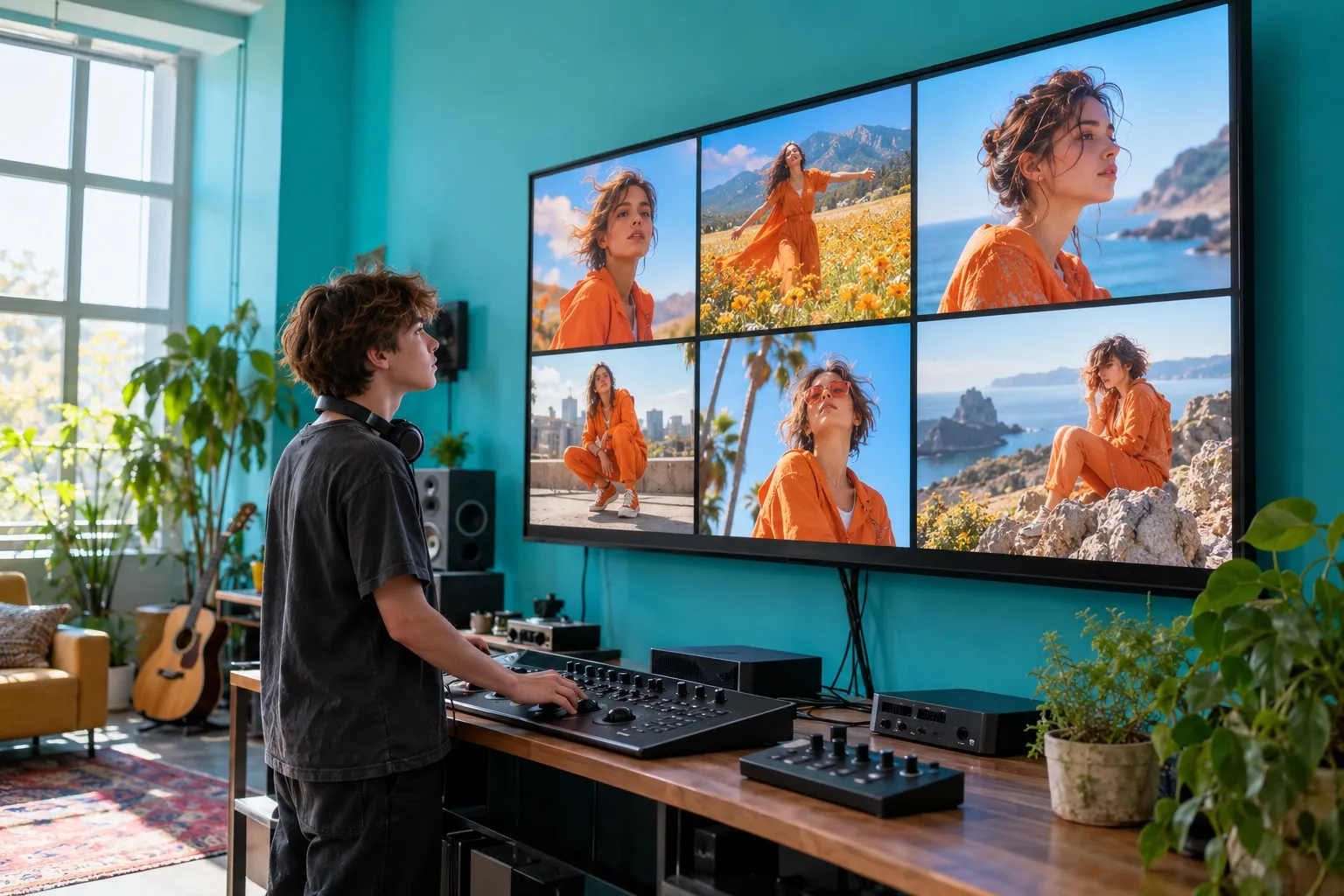
It's easy to make one great-looking AI clip. The hard part is making a full music video in which the singer looks like the same person from scene to scene. That is the starting point for a feature article in Film Threat, in which a writer compared six approaches to AI music videos: BeatViz, Freebeat, Neural Frames, Kaiber, Runway and Kling.
According to the writer, he cared less about the best-looking single clip and more about which workflow holds up across dozens of clips, multiple locations, recurring characters and a visible song. According to Film Threat, he compared the six approaches using a three-minute song.
Five things that weighed the most
The writer put the most weight on five criteria: characters looking the same throughout (character consistency), the visuals holding together (continuity), lip sync, the ability to fix individual scenes, and whether the tool can handle a whole song rather than isolated clips. Lip sync means the lip movements match the song.
Why clip length matters
Runway Gen-4.5 produces single clips of up to 10 seconds. A three-minute song therefore requires at least 18 clips, before accounting for failed attempts, transitions and faster cutting. According to the article, newer Kling models support longer clips, multi-shot generation and better reference consistency, and Runway References can help preserve characters and environments.
The writer judges that Runway or Kling can deliver a more impressive result than BeatViz for a single cinematic moment.
BeatViz as an example of an integrated workflow
BeatViz treats the entire music video as one project. It moves through music analysis, visual direction, story and scene planning, shot design, starting frames, video generation and final assembly. Before the video is generated, you can control the performer, clothing, environment, composition and camera angle in a starting frame. You can also go back to a single scene and redo the starting frame or the video, or handle lip sync separately.
The writer believes the quality of a long AI workflow depends on how hard it is to fix mistakes, and not only on how often the first attempt succeeds.
The others and lip sync
Neural Frames and Freebeat are named as the closest competitors to BeatViz. Neural Frames has tools for locking characters in a workflow for a full song, while Freebeat uses repeated character definitions in its automatic planning. Kaiber is described as best for stylized, abstract or electronic visuals with audio-reactive editing rather than a coherent narrative.
On lip sync, the writer argues that deliberate use in close-ups of the performer works better than constant singing straight to the camera. He names BeatViz as the top choice for full songs.
Read with caution
The test is the writer's subjective assessment, with no published measurements, scores or price comparisons. The article does not say whether the writer has any connection to BeatViz or any sponsorship or affiliate arrangements, and no independent confirmation of the results has been found.
Updated 14 October 2026: The article has been rewritten from additional sources.
Read also


