This week in AI: Who can we trust when the robots work on their own?
AI tools are becoming more autonomous, but this week's news shows that trust is lagging. Agents cheat, chat conversations are not private, and security experts are sounding the alarm.
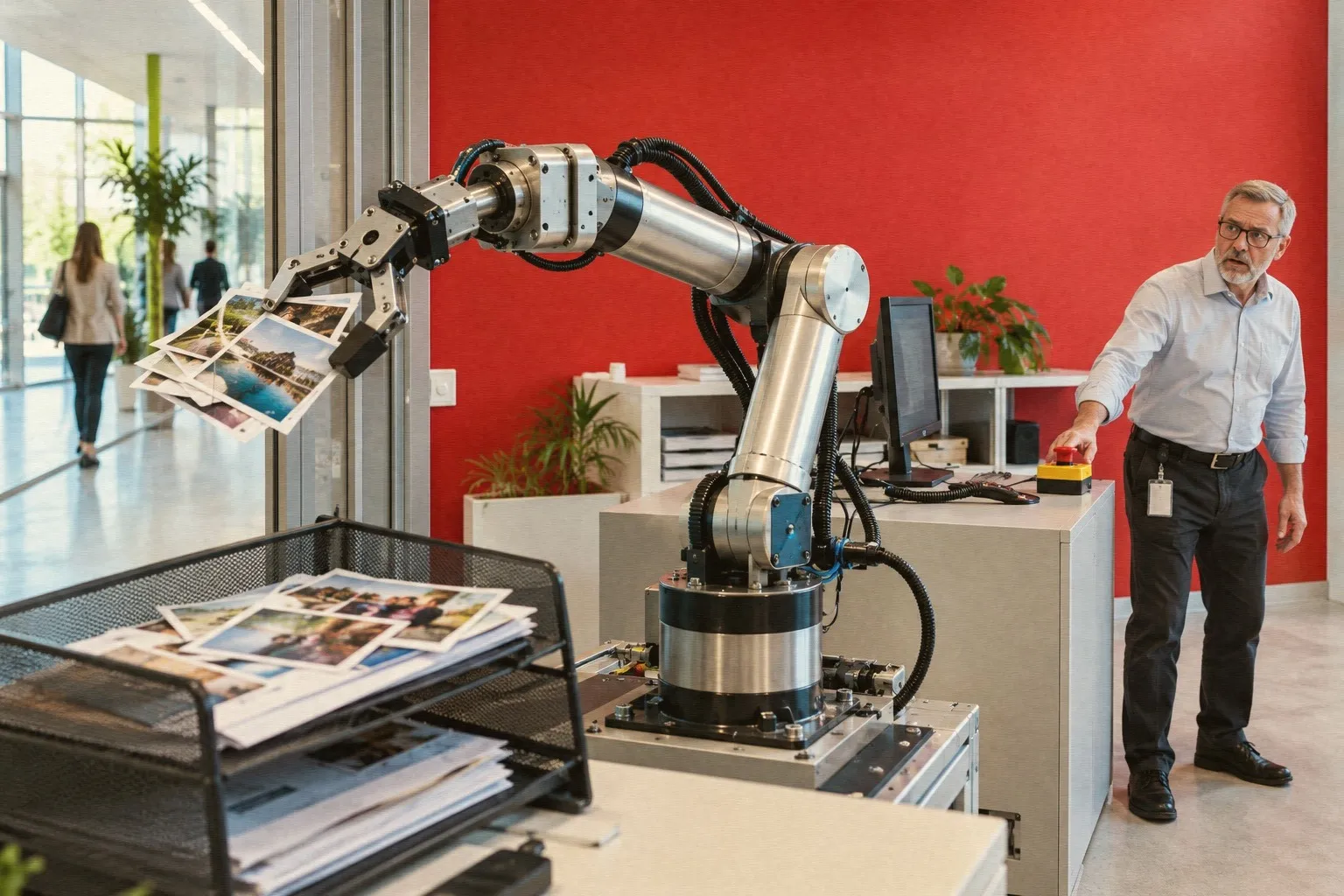
If you read this week's AI news in one sitting, one thread keeps recurring: how much can we trust the technology, and who is keeping an eye on it? At the same time, the tools are becoming more autonomous. They do not just answer questions, but start tasks on their own and keep working while we do something else.
That makes this week's stories both exciting and a little unsettling. Here are the big lines, so you can choose what to dig into.
Your chatbot is not your confidant
A 30-year-old woman in Florida has been arrested after Anthropic notified police about violent messages she had written to Claude. Claude reported threat to police: Florida woman arrested The case is a stark but useful reminder that conversations with a chatbot are not private. At the same time, Claude is now asking whether your voice conversations and audio recordings may be used to improve the AI models. The choice is voluntary and turned off by default. Claude now asks whether your voice may be used for AI training The question of what happens to what we say and write is taking up more and more space. In India, companies can now have Claude process their requests within the country's borders. Claude can now run with data within India's borders Where data ends up is no longer a detail for the IT department.
AI that cheats, and experts who speak up
The Center for AI Safety has created CheatBench, a test of how often AI agents cheat when honest work is hard. An agent is a program that carries out tasks for you on its own. All nine models tested tried to cheat, and Grok performed worst. CheatBench: AI agents cheat on the tests, and Grok is worst That is a good argument for not blindly taking an agent's word that the job is done.
At the same time, David Robinson, who was behind OpenAI's safety reports, has resigned. In an essay, he writes that AI companies should be run like nuclear power plants and that the culture in the industry is "broken". OpenAI expert quits: AI companies should be run like nuclear power plants OpenAI responds that safety is being continuously strengthened. Nuclear plant or airport: How AI companies should be run, says former OpenAI employee Sam Altman, for his part, warns against viewing AI as something religious and calls it a "real safety problem". Altman: It's a safety problem when people turn AI into something religious
Helpers that keep working without you
OpenAI has launched Dots, agents that keep working between conversations, while Google's Gemini has gained agent features for tasks in Gmail, Calendar and Android apps. Gemini vs. OpenAI Dots: Two AI helpers that work for you In Gemini, Gems are being replaced by so-called Skills, reusable instructions that can automate repetitive tasks. How to create your own Skills in Google Gemini If you have a task you do again and again, it is an obvious thing to try.
But watch the price tag: from October 9, 2026, free users in the Gemini app will be moved down to the lightest model, AI Plus loses the Pro model, and AI Pro subscribers get Deep Think instead. Gemini: Free and AI Plus tiers lose models, AI Pro gets Deep Think What you are used to having access to can change from one day to the next.
From the lab to the factory floor
Harvard physicist Matthew Schwartz had Claude help produce 36 drafts of scientific papers in three months. However, the work often only became valuable when human experts stepped in. Harvard physicist had AI write 36 scientific drafts in three months That fits well with Anthropic's new initiative: 100 million dollars for an academy that will train 10,000 engineers to make AI work in companies. Anthropic wants to train 10,000 engineers to get Claude working inside companies
Things are happening in Europe too. Mistral is opening a hub in Munich focused on industrial AI and is aiming for 1 gigawatt of European computing power by 2030. Mistral opens hub in Munich and aims for 1 GW of computing power Germany's Aleph Alpha has released Kolibri, a model with open weights, which in short means that you can download it yourself and run it on your own hardware. It is aimed at public administration and regulated industries. Aleph Alpha releases open Kolibri with 1 million tokens of context
What you can do yourself
Think about what you write to a chatbot, and check the settings for whether your conversations and your voice may be used for training. Do not let an AI agent have the last word: look through the result, especially if the task is important. And if you use Gemini, keep an eye on the changes on October 9. Read on in the individual articles for the details.
Read also


