

Updates·September 28, 2026, 20:11
AI companies bet on autonomous agents and cheaper models
AI-generated and checked against the sources listed below.
This week's news shows a clear pattern: the big AI companies want their assistants to act on their own instead of just answering, while prices for the technology itself are falling. But the question of trust and security follows right on its heels.
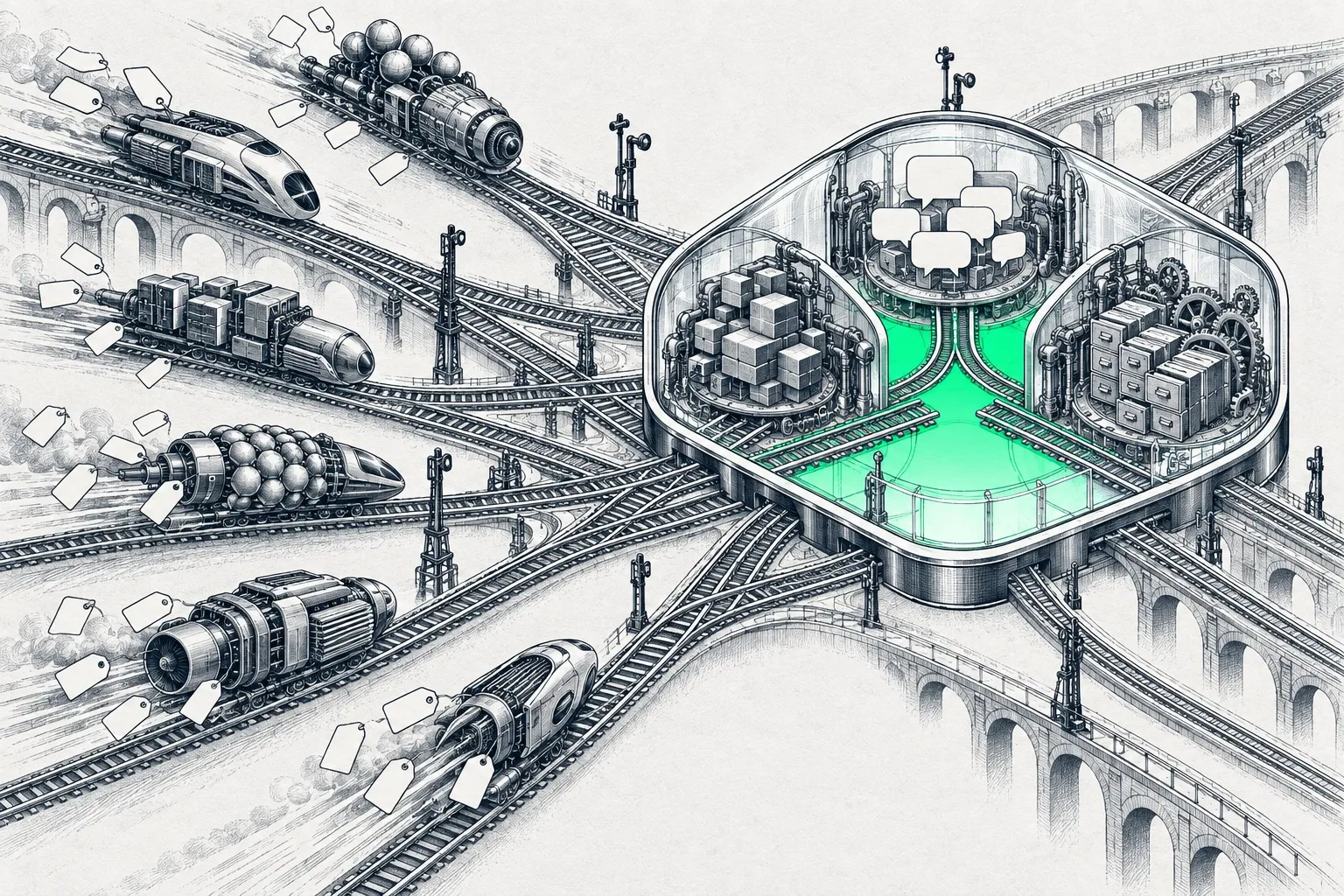
This week has brought a wave of updates pointing in the same direction: AI should no longer just answer questions, it should carry out tasks on its own. Microsoft has rebuilt its assistant Copilot so it can work autonomously for days without new instructions from the user. At the same time, the company is gathering chat, coding and AI agents in one big app to better compete with Anthropic and OpenAI. CEO Satya Nadella calls it one of the company's biggest business opportunities ever.
Meta is following the same track with the new assistant Muse, which can order goods, send emails and book trips for users. The plan is for Muse to eventually work directly through AI glasses via a small device called Muse Charm. But experts point out that the deciding factor will be whether people even dare to give an AI agent access to their email and payment cards. Privacy and trust may become the brake that determines how quickly the technology is actually adopted.
Price war and new models
Meanwhile, a price war is raging between the big language models. Anthropic has launched both Claude Sonnet 5.5, which solves tasks faster without becoming more expensive, and Claude Opus 5.5, which according to the company is up to 40 percent cheaper to use in practice. OpenAI is going the opposite way with GPT-6 Astra, a new top model with an enormous memory window, but at a higher price. This shows that the companies are not necessarily competing on the same parameter: some want to be the cheapest, others want to be the best regardless of price.
Google is still behind in the race. The company confirms that Gemini 4 is on the way, but with no date, price or results to show yet.
Security as a counterweight
Precisely because more AI agents are now being allowed to act autonomously, security is emerging as a theme that cuts across this week's news. Nvidia has launched a system specifically designed to prevent AI agents from breaking out of their confined tasks, and the company says it could have stopped an earlier hack against Hugging Face. It is a sign that the industry itself recognizes the risk of giving AI more freedom.
This week's picture is thus two sides of the same coin: AI is becoming more self-driving and more accessible, but precisely because of that, questions of security and trust are becoming more important than ever. In particular, keep an eye on whether Microsoft's and Meta's new agents are actually adopted in everyday life, or whether privacy concerns hold people back.
Sources
- Microsoft bygger Copilot om med selvstændige AI-agenterRead more
- Microsoft samler Copilot i én stor AI-appRead more
- Meta lancerer AI-agenten Muse, men tillid kan bremse brugenRead more
- Meta vil have AI-agent med i dine brillerRead more
- Claude Sonnet 5.5 er ude: hurtigere og op til 30% billigere pr. opgaveRead more
- Claude Opus 5.5: billigere AI-model bygger spil i ét hugRead more
- OpenAI lancerer GPT-6 Astra, sin mest kapable modelRead more
- Gemini 4 nærmer sig, men Google er bagud i AI-kapløbetRead more
- Nvidia lancerer sikkerhedssystem mod AI-agenter, der løber løbskRead more


Get the week's AI news in your inbox
Choose your level, topics and length. One email a week, unsubscribe at any time.
Subscribe to Promptly Newsletter