

Breakthroughs and research·October 16, 2026, 18:28
Rivian CEO bets on factory robots with two arms and wide fingers
AI-generated from the sources listed, with automated source checks.
RJ Scaringe, CEO of Rivian, has founded Mind Robotics, which builds robots for factories. The company has raised more than $1 billion and is being tested at Rivian's factory in Illinois.
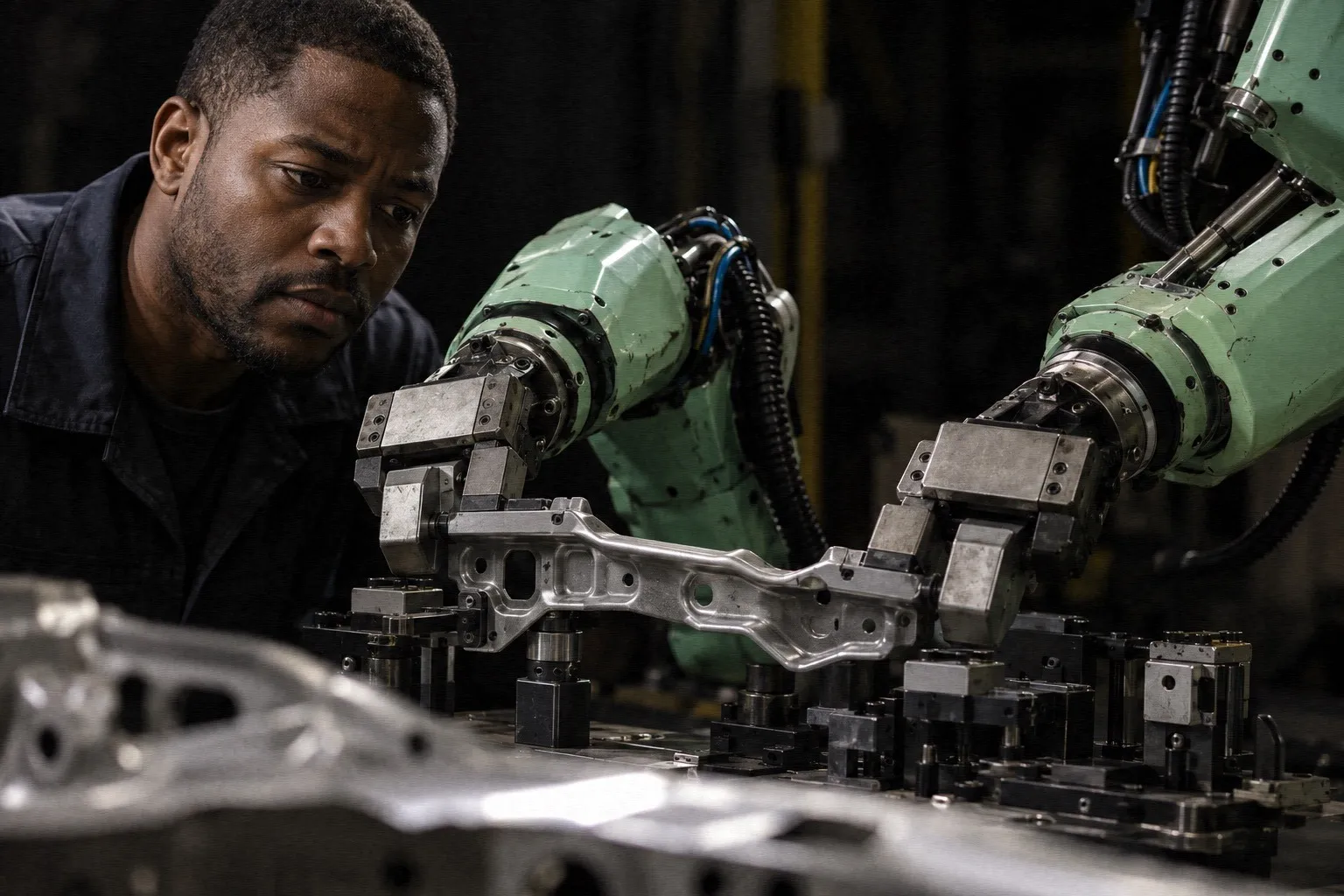
RJ Scaringe, CEO of automaker Rivian, founded the company Mind Robotics in 2025. It builds robots designed to work in factories. According to Scaringe, the technology is advancing much faster than expected.
Mind Robotics began as an internal Rivian project called Project Synapse and became an independent company in late 2025. Rivian is a strategic partner and shareholder.
Funding and competitors
Mind Robotics has raised more than $1 billion in total. The amount covers several rounds: seed, Series A and a $400 million round in May 2026. The latest round was led by Kleiner Perkins, with Salesforce Ventures and Incharge Capital among the participants. The company was valued at around $3.4 billion in that round.
On the factory floor, Mind Robotics competes with Figure AI, Agility Robotics, Amazon and Tesla, among others.
The robots
The robots have two arms and two hands. The fingers are made wider than a human's, so the robot can grip delicate objects precisely and gently. They differ from Tesla's humanoid robot Optimus in that they are aimed at factories.
Instead of fixed, programmed movements, they are trained with transformer-based AI models. This is the same type of technology behind many modern language models. The idea is for the robots to learn broadly applicable skills.
Training takes place at Rivian's factory in Normal, Illinois, among other places, where Mind Robotics deploys robots for testing. Rivian employees wear cameras that record their movements as training data for the AI models.
Scaringe's view of the economics
According to Scaringe, the economics are best in industry. He believes manufacturers will pay $50,000 a year for a robot that works three shifts at a factory. That is his own estimate and not a documented market price. According to him, consumer robots such as clothes folders lack viable markets.
Scaringe also believes most industrial factory work can eventually be automated. He calls it a transition spanning several decades and compares it to the mechanization of agriculture, which took 125 years.
Mind Robotics' technical claims have not been independently verified.
Source



Get the week's AI news in your inbox
Choose your level, topics and length. One email a week, unsubscribe at any time.
Subscribe to Promptly Newsletter