

Ethics and safety·September 24, 2026, 22:27
Trump and Xi to discuss AI risks, but experts doubt a deal
AI-generated and checked against the sources listed below.
The US and China will discuss the dangers of artificial intelligence at a summit. Experts are skeptical that China will commit to concrete rules.
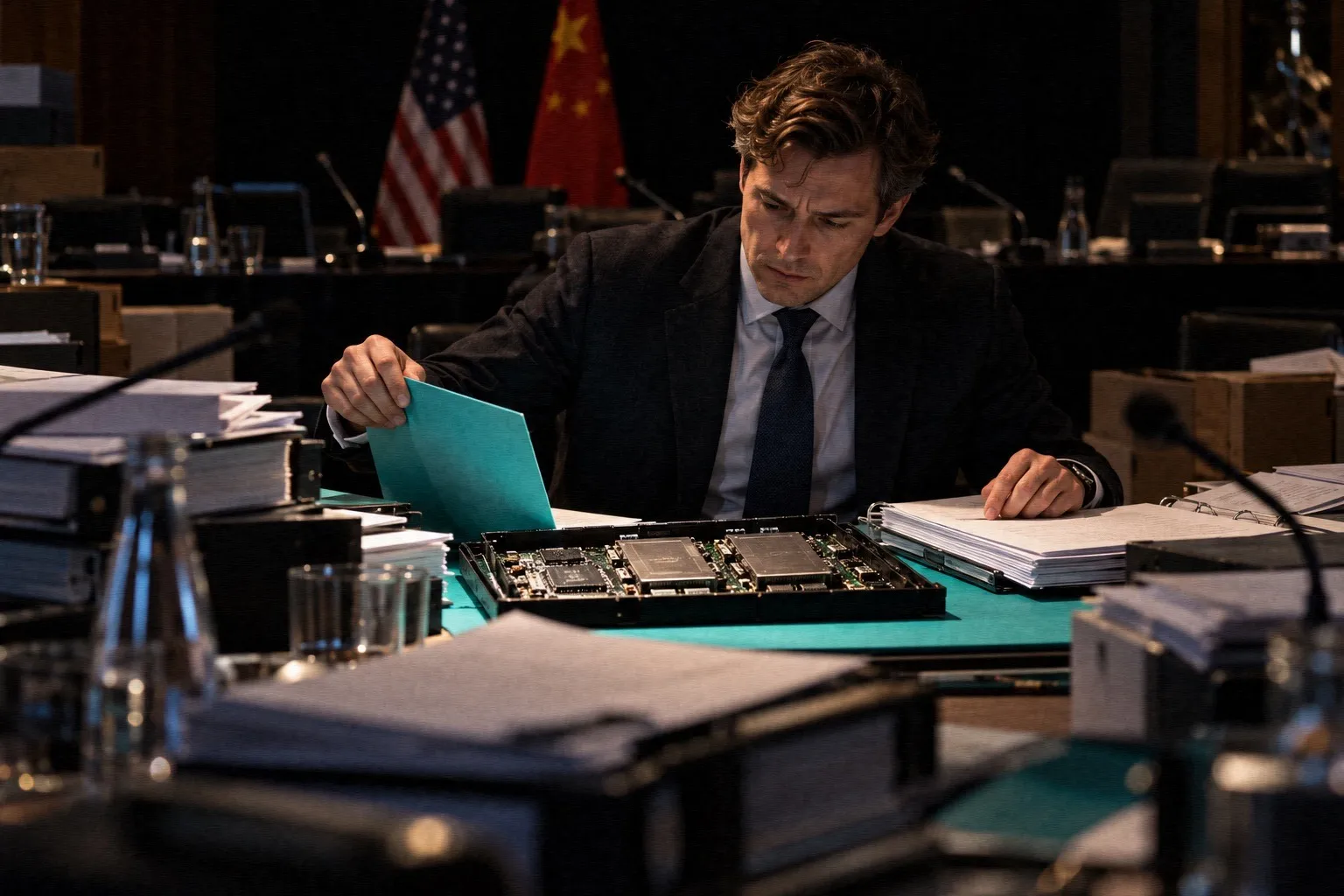
President Donald Trump and Chinese President Xi Jinping have put artificial intelligence (AI) on the agenda when they meet. This applies especially to the risks of the technology. However, many experts do not expect an actual AI treaty.
Shared fears
Both countries fear that AI could be misused to design bioweapons or to hack critical infrastructure such as power and water. Experts have proposed steps such as a hotline that could be used to defuse a crisis if an AI incident triggers conflict between the countries.
According to media reports, the two governments agreed the day before one of the meetings to open a formal AI dialogue. US Treasury Secretary Scott Bessent was to lead the US side. China had not yet named a counterpart. Trump has also called AI "superintelligence" and said that "decisions" would have to be made on the subject.
Rivalry stands in the way
At the same time, the countries are competing to be the best at AI. The US restricts China's access to advanced Nvidia chips, and the US accuses China of technology theft on an industrial scale. China, for its part, has developed its own chips. Another point of contention is so-called distillation, where cheaper versions of competitors' AI models are created.
Chris McGuire of the American think tank Council on Foreign Relations assesses that China's willingness to enter into and comply with strong international agreements on AI safety is low. Chen Liang of the Chinese firm Strategic Times Consulting also expects no "dramatic breakthroughs."
Arms control experts point out that China has for years been reluctant toward agreements that limit the country's military capabilities. China would therefore see an agreement that caps Chinese AI as a form of arms control.
Small steps
There are also more positive voices. Michael Jinghan Zeng of City University of Hong Kong highlights that the countries share concerns. An earlier example is that in 2024, Xi and former President Joe Biden agreed that humans, not machines, should control decisions on nuclear weapons.
A report from a later meeting in Washington in September says it ended without an AI agreement, even though American politicians, among others, had wanted at least a technical working group. That information is based on one source, which we have not been able to confirm with others.
For ordinary Danes, this means binding global rules for AI are unlikely to come from the two big countries anytime soon. Agreements on communication and crisis management are more realistic.
Sources



Get the week's AI news in your inbox
Choose your level, topics and length. One email a week, unsubscribe at any time.
Subscribe to Promptly Newsletter