

Ethics and safety·June 30, 2025, 19:35
Denmark wants to give citizens the right to their own face and voice
AI-generated and checked against the sources listed below.
The government wants to amend the Copyright Act so people can demand that deepfakes of themselves be removed from the internet. The proposal has broad political support.
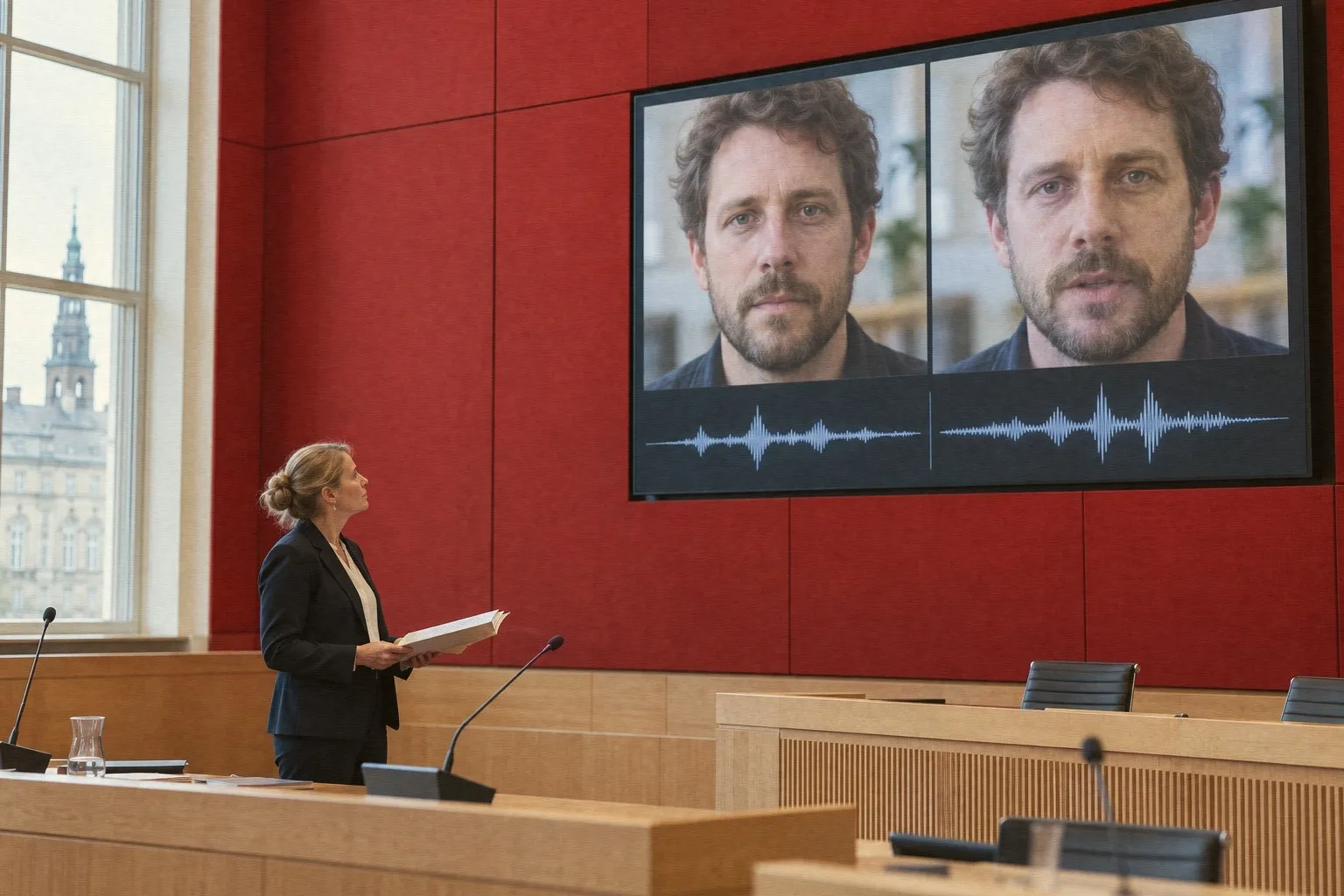
Denmark wants to give citizens an actual right to their own appearance and their own voice. This is to be done by amending the Danish Copyright Act so that it also covers facial features, body and voice. That is according to coverage in several international media outlets.
The idea is a safeguard against deepfakes. These are images, videos or audio clips made by AI that very convincingly resemble a real person. It could be, for example, a fake video in which a famous person says something they never said, or a cloned voice.
What does the proposal change?
According to the sources, the proposal gives you the right to demand that a deepfake of yourself be removed if you have not given consent. Platforms that refuse to remove the content could face large fines. Performing artists are also to be protected against AI imitating their performances without permission.
The law is to cover digitally created content that is "very realistic". Satire and parody will still be allowed. That is tied to the rules on freedom of expression in the EU.
Why is Denmark doing this?
Using copyright as the tool gives the individual a clear right that can be asserted against platforms. That is a different route from creating special criminal provisions. One legal overview calls the approach the most ambitious in the world, because identity protection is turned into a copyright matter.
The government has said it has broad support from the major parties. The media described the law as the first of its kind in Europe. The original goal was for the amendment to be in place in late 2025 or early 2026.
What does it mean for you?
If the law is passed in the form described, ordinary Danes may get a stronger argument against, for example, social media if a fake video or voice clone of them shows up. You do not need to be famous to be protected. But it is still unclear how the rules will be enforced in practice and how quickly platforms will have to respond.
So check the final legal text and the Folketing's (the Danish parliament's) handling yourself before you count on specific rights.
Sources
Get the week's AI news in your inbox
Choose your level, topics and length. One email a week, unsubscribe at any time.
Subscribe to Promptly Newsletter