

Business and economy·March 13, 2026, 01:00
Microsoft wants "physical AI" in factories
AI-generated and checked against the sources listed below.
Microsoft points to "physical AI" as the next step in industry: machines and software that coordinate work on the factory floor. According to an article in MIT Technology Review, humans should still make the decisions.
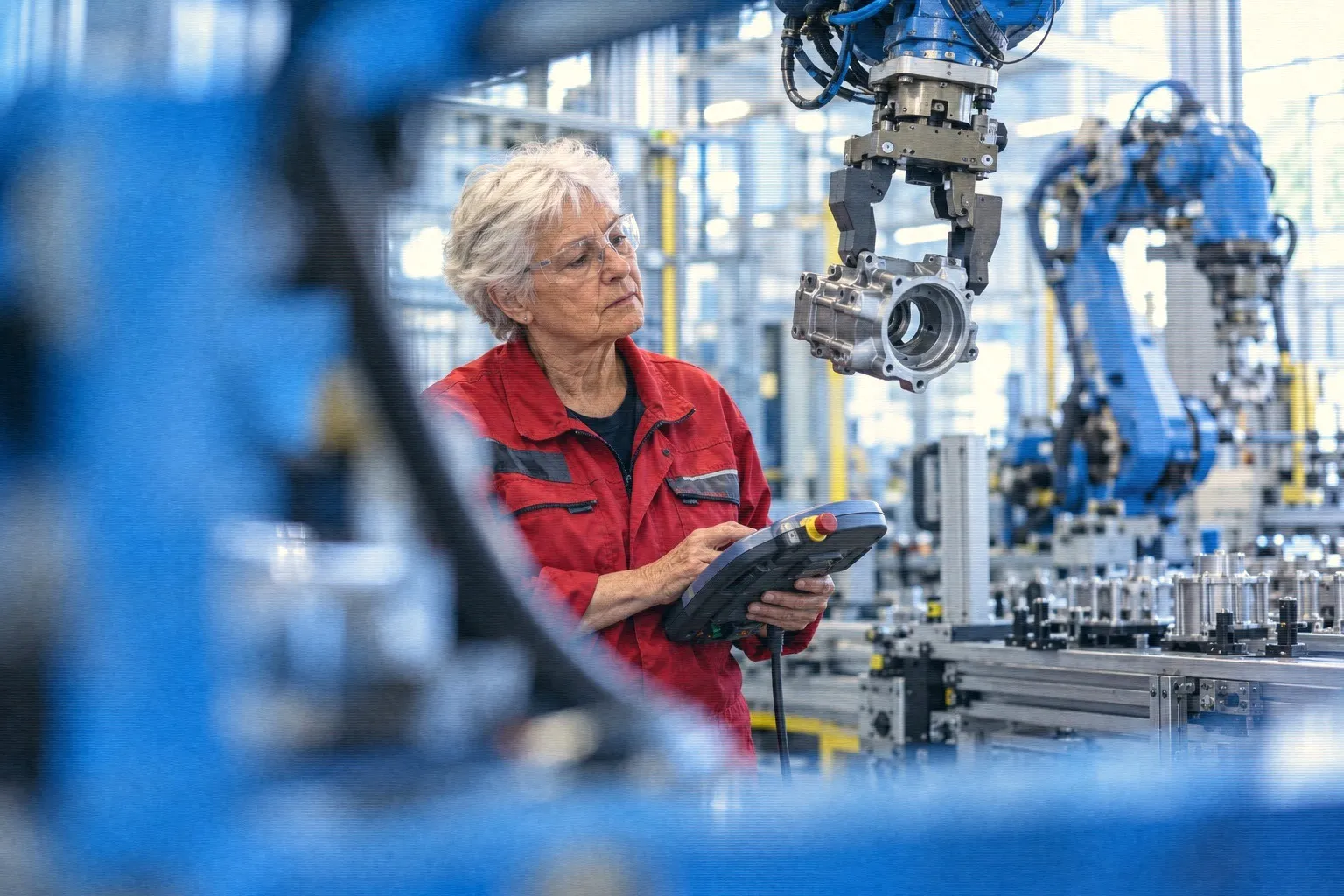
Microsoft says manufacturing companies face a shift from standalone AI tools to what the company calls "physical AI". That is AI that can sense, assess and act in the real world and not just on a screen.
An article in MIT Technology Review from March 2026 describes it as a move away from traditional automation. Before, machines did the same thing over and over. Now AI must be able to coordinate machines, adapt to variation in the physical world and work side by side with employees.
What will it be used for?
The article mentions several concrete applications:
- Optimizing production lines in real time - Coordinating maintenance and quality - Adapting when supply and demand change - AI agents that first test changes in a virtual model (simulation) and only then apply them in the factory
An AI agent is a program that can carry out multi-step tasks on its own on behalf of a user.
Microsoft and its partners
According to the article, Microsoft provides a cloud and data platform meant to run physical AI securely and at scale. The company works with chip giant NVIDIA, which provides computing power, simulation tools and frameworks for robots. The goal is to move beyond pilot projects to systems that can be used in daily production.
Other partners are following. Hexagon Robotics has entered a partnership with Microsoft on physical AI. The Indian company Infinite Uptime has connected its PlantOS platform to Microsoft's systems such as Azure, Fabric and Copilot. A Microsoft executive reportedly said that AI creates value when it can understand the physical world, recommend a concrete action and document that the action produced the desired result.
Humans stay in control
The article highlights two requirements: AI must build on the company's own data and workflows, and it must be trustworthy, with security, governance and the ability to follow what the system does. Humans continue to be the ones who decide. AI executes, monitors and makes recommendations.
For ordinary employees, it means AI will increasingly be part of daily life in factories and warehouses. It is, however, an area where much is still at the planning and pilot stage, and the article was written in collaboration with Microsoft, so it should be read as a description of the company's own vision.
Sources

Get the week's AI news in your inbox
Choose your level, topics and length. One email a week, unsubscribe at any time.
Subscribe to Promptly Newsletter