

Updates·October 12, 2026, 15:22
Microsoft's new AI chip to run Copilot from 2027
AI-generated from the sources listed, with automated source checks.
Microsoft has unveiled Maia 300, its third generation of in-house AI chips. According to Microsoft, it delivers 40% more output at the same power consumption as GPU systems, but the figures have not been independently verified.
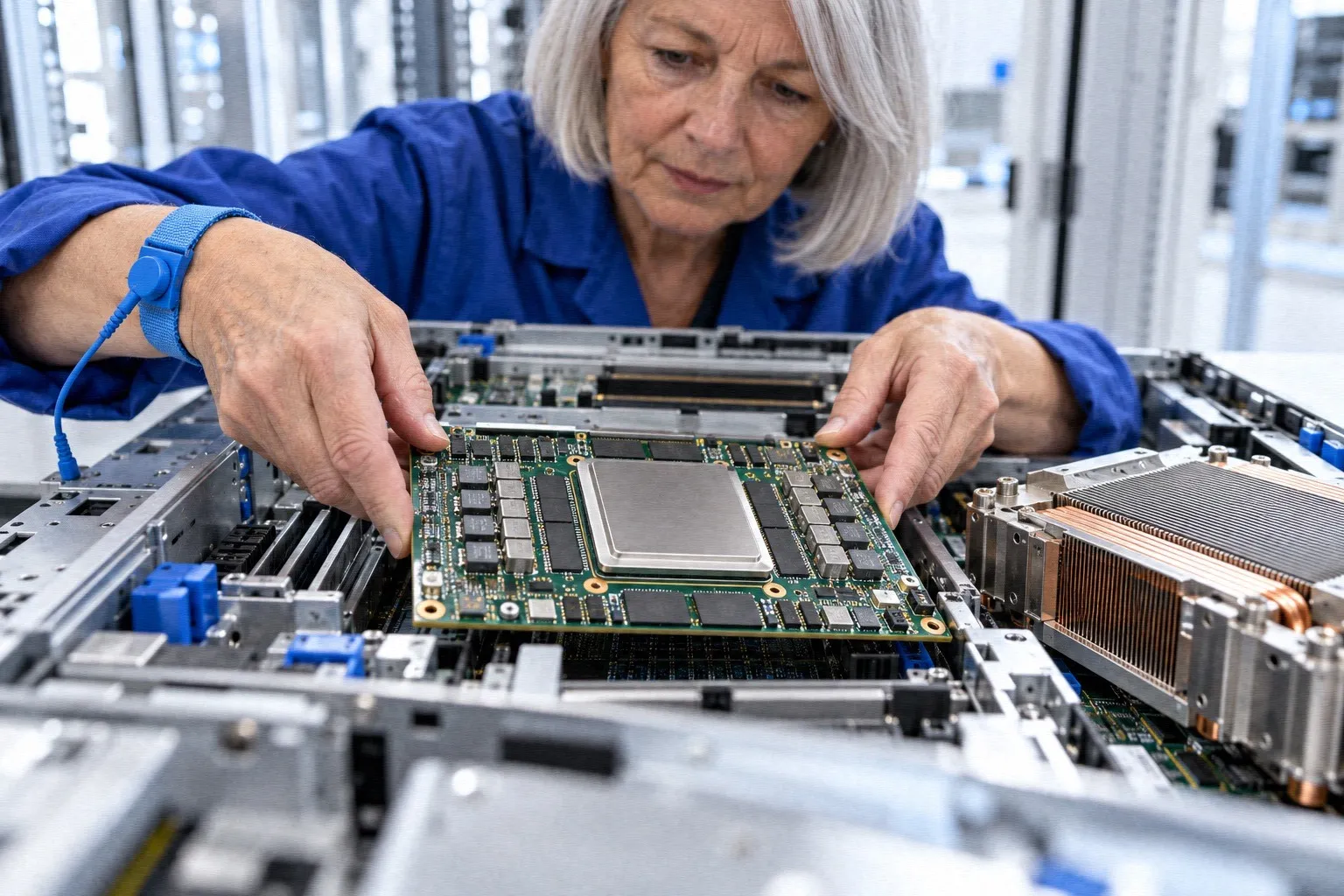
Microsoft has unveiled Maia 300, the third generation of the company's in-house chip for artificial intelligence. The announcement is dated October 12, 2026. The details here come from media coverage of the announcement.
The chip is built for inference, meaning the actual running of already trained AI models. It also targets AI agents, which carry out complex, multistep tasks.
What's new
Maia 300 has eight HBM4 memory stacks. Its predecessor, Maia 200, had six HBM3E stacks. Memory is the part that feeds data to the chip's compute power, and here the bandwidth is 18 TB/s. The design is built from several smaller chip components (chiplets) for compute, memory and data transport. According to The Next Web, the compute dies are manufactured at TSMC on the N2P process.
A rack, meaning a cabinet of servers, holds 96 Maia 300 chips, four per server, and draws about 167 kW. By comparison, a rack with Nvidia's GB300 holds 72 GPUs and draws about 142 kW.
Microsoft's claims
Microsoft claims that Maia 300 delivers 40% more AI output at the same power consumption as GPU-based systems. That equates to 40% more tokens per megawatt than the best GPU systems. A token is a small piece of text that an AI model reads or writes. Microsoft also says a full rack delivers up to seven times the output of Maia 200.
The figures are Microsoft's own and have not been independently verified.
Rollout from 2027
The rollout is planned to begin in 2027 and expand gradually through 2028. Seoul is among the planned locations, but the timing has not been disclosed. In 2027, Maia 300 is set to be a central platform for Microsoft's AI services, including Copilot, GitHub Copilot, Foundry and OpenAI models.
Microsoft is planning a gigawatt-scale rollout, potentially more than one million chips in 2027. That is The Next Web's wording of a possible scale and not a confirmed order. Maia chief Andrew Wall says, according to Seoul Economic Daily: "we are looking at deployment on the scale of gigawatts across Maia 300".
There have also been reports that Microsoft has discussed with TSMC manufacturing more than 300,000 Maia 300 chips for 2027. Seoul Economic Daily instead writes about 300,000 wafers a year, and that management says the need is greater. These are reported discussions, not confirmed orders.
Nvidia remains
Maia 200 already runs Copilot and internal AI workloads, and Microsoft will expand its rollout before the end of 2026. Nvidia's technology continues to play an important role, and Microsoft will maintain a mixed infrastructure. With its own chips, Microsoft is following Google (TPU) and Amazon (Trainium).
Sources
Found via GeekWire



Get the week's AI news in your inbox
Choose your level, topics and length. One email a week, unsubscribe at any time.
Subscribe to Promptly Newsletter