

Business and economy·September 20, 2026, 11:11
AI moves deeper into company systems and accounting
AI-generated and checked against the sources listed below.
This week shows AI moving from experiment to a permanent part of company infrastructure, from CRM systems to drug development. But the bill, the oversight and the effect on jobs are still hard to get a handle on.
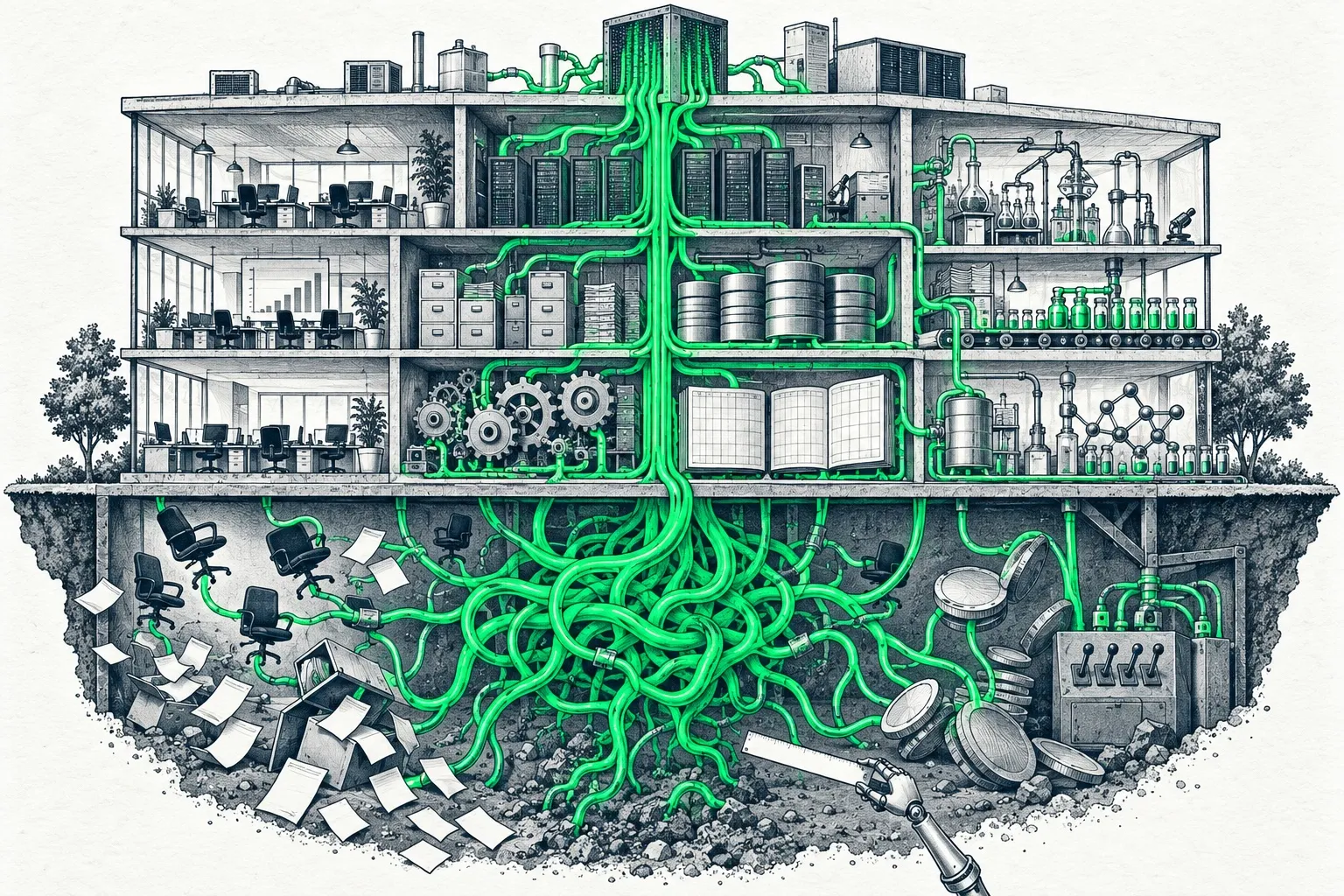
This week's stories paint a clear pattern: AI is moving from being something employees play with on the side to being woven directly into companies' core systems. Salesforce has launched its own AI model, Koa, for sales and customer service, while Google has updated its assistant Gemini so it can connect to both Salesforce and HubSpot. Anthropic is doing the same from the other side, giving its chatbot Claude direct access to the entire Salesforce system with 37 built-in sales tools. It is no longer a question of whether AI comes into the systems, but of how many different AIs are already sitting there.
AI moves beyond the office
At the same time, usage is spreading beyond classic office functions. Novo Nordisk has entered into a partnership with Anthropic to use AI to find new drugs faster, and Anthropic, together with Accenture, has set aside two billion dollars for independent oversight of advanced AI models, although critics ask how independent an arrangement really is when Anthropic itself funds it.
Jobs and a lack of overview
But the more space AI takes up, the clearer the economic and organizational challenges become. A new analysis from Danmarks Nationalbank shows that Danish companies using AI hire fewer new employees than comparable companies without AI. It is a concrete Danish figure that gives the debate about AI and jobs a more tangible edge.
At the same time, many companies are struggling to keep track of what the AI actually costs and does. Half of Danish companies don't know how employees use AI day to day, and on the cloud side, unpredictable AI bills are leading more IT managers to go through their agreements with AWS, Azure and Google with a fine-tooth comb. It is a recurring pattern: companies are adopting AI faster than they can measure and manage its effects.
A geopolitical race in the background
Around the concrete business stories, the broader debate about how fast the industry should move also continues. Mark Zuckerberg refuses to slow development and believes the responsibility lies with each individual company, while the Chinese state media outlet Global Times calls similar calls from Anthropic's CEO a Cold War move aimed at China. It is a reminder that the business decisions Danish companies make about AI take place in the shadow of a geopolitical race that none of the individual companies really controls.
If you are responsible for AI in your own organization, the clearest advice of the week is probably to start from the inside: map how employees actually use AI today before investing in even more integrations and tools on top of it.
Sources
- Salesforce laver sin egen AI-model til kundeservice og salgRead more
- Google lader sin AI koble sig på Salesforce og HubSpotRead more
- Claude får direkte adgang til hele jeres Salesforce-CRMRead more
- Novo Nordisk vil bruge AI-chatbot til at udvikle medicinRead more
- To milliarder dollar skal gøre kontrol med AI mere uafhængigRead more
- Nationalbanken: AI bremser allerede ansættelser i DanmarkRead more
- Halvdelen af virksomheder har mistet styr på medarbejdernes AI-brugRead more
- AI-regningen fra clouden får virksomheder til at kigge deres AWS-, Azure- og Google-aftaleRead more
- Zuckerberg: AI-branchen skal ikke sætte udviklingen på pauseRead more
- Kina afviser AI-nedbremsning som koldt krigs-taktikRead more



Get the week's AI news in your inbox
Choose your level, topics and length. One email a week, unsubscribe at any time.
Subscribe to Promptly Newsletter