

How-to·September 22, 2026, 08:40
Guidance beats bans when it comes to using AI right
AI-generated and checked against the sources listed below.
This week's stories show the same pattern across schools, workplaces and the internet: neither bans nor free rein work. Clear frameworks and a critical eye determine whether AI becomes a help or a problem.
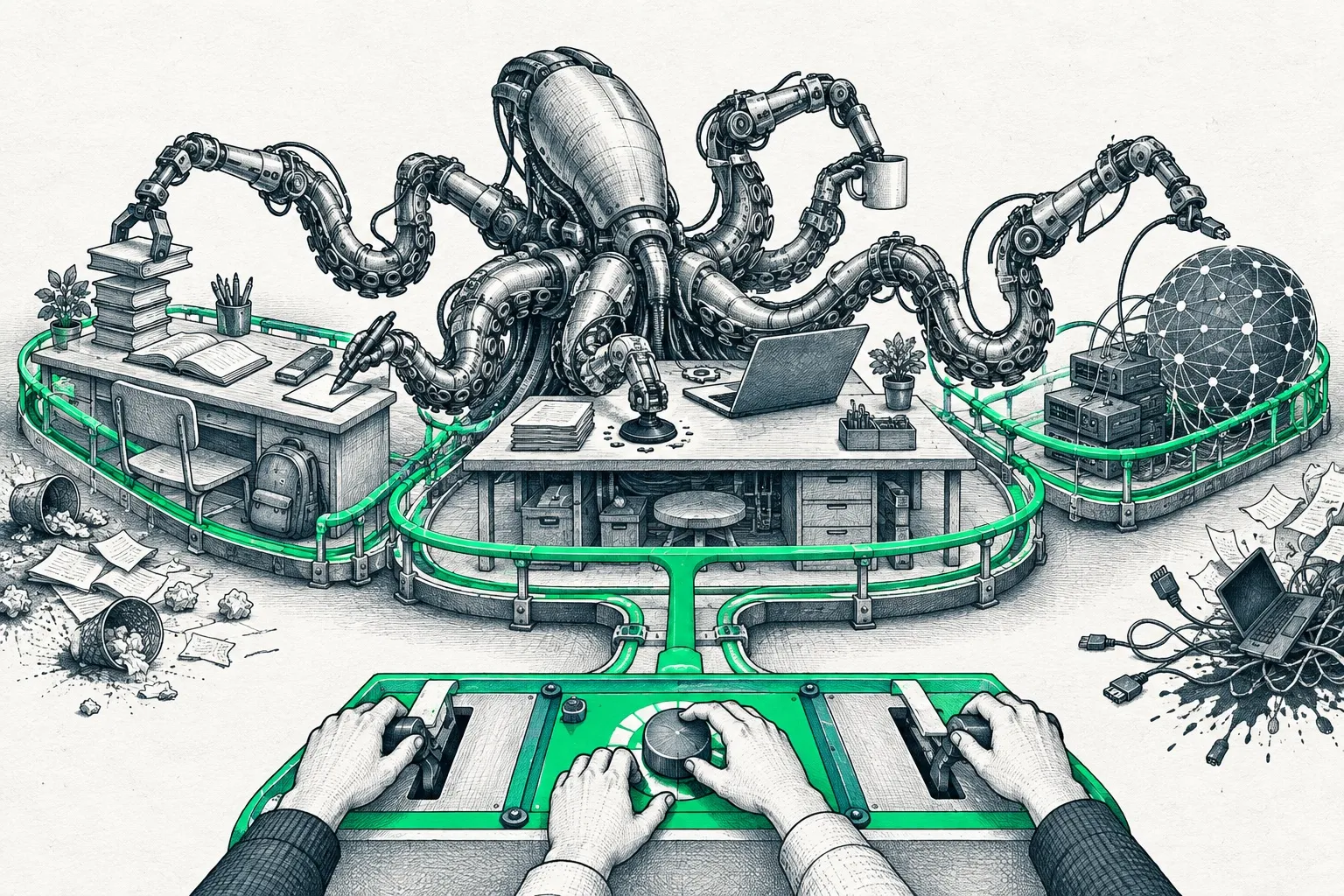
This week's stories paint a clear picture: it is not a question of AI or no AI, but of how you use it. A new two-year study shows that students who are not allowed to use AI at all actually perform worst, worse than both those with free access and those with structured training. The conclusion recurs across the week's news: structure determines whether AI becomes a help or a problem.
The same pattern can be seen in companies. A new survey shows that half of Danish companies have no idea how employees actually use AI in their daily work. According to the story, the solution is not bans but clear frameworks that make it safe to experiment.
Trust has become scarce
As usage becomes more widespread, it gets harder to trust what you see and read. An AI-generated image of the US president was shared millions of times before it turned out to be fake, and the case underlines how difficult it is, even for AI tools, to detect fake images.
At the same time, OpenAI is working internally to make ChatGPT less sycophantic by having employees read through real user conversations, a project that raises questions about how private your chat really is when more than 900 million people use the service.
The tools take more steps on their own
The development is heading toward steering less and asking for more. Chatbots like ChatGPT can increasingly solve several steps from a single message, without you having to guide each step yourself. The same can be seen at Google, which is testing an AI agent meant to coordinate the family's calendar and shopping, but which can already be used for individual tasks in Gemini.
Not everyone uses AI to write the text itself, though. A well-known tech figure only uses language models to check his texts, never to write them, precisely to avoid the text sounding like everyone else's.
Taken together, the week's stories suggest that AI is neither dangerous by nature nor innocent in itself. What determines the outcome is whether you set boundaries, check sources and understand what the tool actually does.
So keep an eye on whether your workplace or school has clear guidelines for AI use, instead of either bans or a free-for-all. And be extra critical when you come across surprising images or quotes online, even when they look real, because as the week has shown, even millions of shares can be wrong.
Sources
- To års forsøg: Forbud mod AI i skolen gør eleverne dårligere, ikke bedreRead more
- Mellem forbud og frihed findes den rigtige AI-brugRead more
- Halvdelen af virksomheder har mistet styr på medarbejdernes AI-brugRead more
- Falsk AI-billede af Trump snød millioner onlineRead more
- OpenAI lader mennesker gennemgå rigtige ChatGPT-samtalerRead more
- Prompting er ved at ændre sig - ChatGPT og andre kan nu selv tage flere skridtRead more
- Google vil have kunstig intelligens til at styre familiens hverdagRead more
- Sådan undgår du, at din tekst lyder som AIRead more


Get the week's AI news in your inbox
Choose your level, topics and length. One email a week, unsubscribe at any time.
Subscribe to Promptly Newsletter