Chinese AI successes fail to lift stock prices
Huawei and DeepSeek are gaining ground, but Chinese tech stocks like Alibaba and Tencent have fallen sharply in 2026, while US AI stocks have risen. That's according to an analysis from Startupfortune.
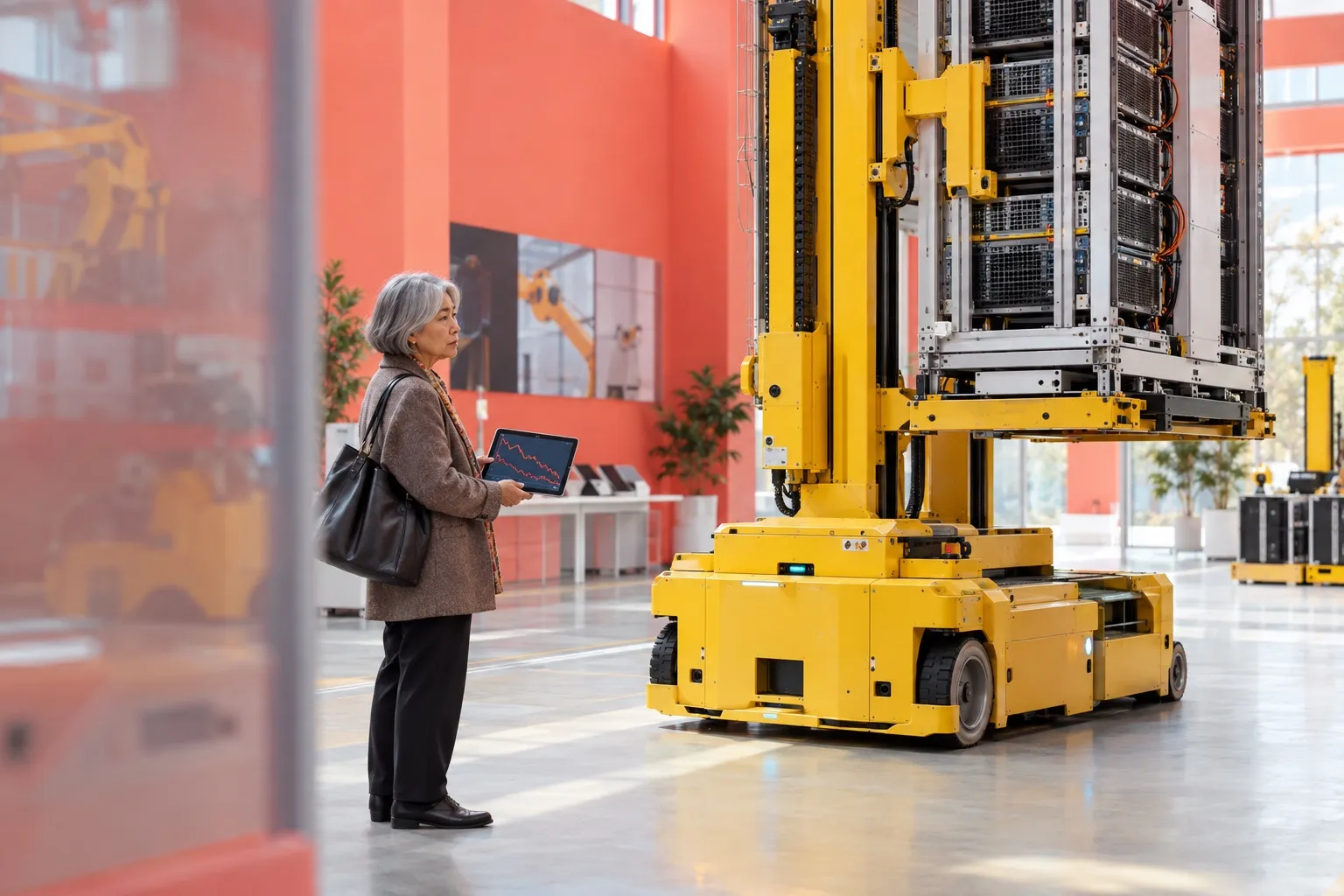
Chinese AI has had a good year in terms of news, but it isn't showing up in the stock market. Alibaba's shares in Hong Kong were down about 27 percent in 2026 through September 25, according to Startupfortune. Tencent was down about 23 percent. US AI and infrastructure leaders were up more than 15 percent over the same period.
Earnings are pulling in different directions
Last quarter, Alibaba came in 17.3 percent below analysts' expectations for earnings per share. At the same time, revenue in AI Cloud and Compute Services, the company's AI and cloud services, rose 45 percent to $7.1 billion.
Baidu missed expectations by 36 percent. AI Cloud made up 52 percent of Baidu's General Business revenue. Baidu's high P/E of 630 (a measure of how expensive a stock is relative to earnings) is due to a one-time write-down that dragged down the reported result, according to the source.
Tencent was the only one of the three to beat expectations for the quarter ending in June. The stock trades at 14.8 times trailing earnings, with 12 percent revenue growth.
Huawei gains room as Nvidia is squeezed
Bernstein expects Nvidia's share of the Chinese AI chip market to fall from about 40 percent in 2025 to about 8 percent by the end of 2026. Huawei's Ascend chips are expected to rise to around 50 percent over the same period. Huawei's AI chip revenue is expected to reach $12 billion in 2026, up 60 percent from $7.5 billion in 2025. It is not clear what the forecast is based on.
Some industry analysts consider Huawei's Ascend 950 series roughly on par with Nvidia's H200. According to Startupfortune, export controls and Beijing's pressure on customers have given Huawei an opening, while Nvidia has been pushed out.
MarketScale points out, however, that Chinese AI development, including the training of large language models, still depends on Nvidia hardware. Smuggling cases and persistent shortages suggest that demand remains.
The models are catching up
In mid-May, DeepSeek became the largest model developer on the OpenRouter service by token share (the proportion of total usage that the models account for), and it had nearly 20 percent at the start of June. By then, Chinese open models such as DeepSeek, Qwen, MiniMax and Tencent's Hunyuan had overtaken the American ones.
Bloomberg Intelligence found that the performance gap between Chinese and American frontier models was at a record low of 6 percent in June, down from 9 percent in May.
Why are investors holding back?
According to Startupfortune, the market is still skeptical because of earlier regulatory crackdowns, delisting threats and an unresolved property crisis. That is the author's assessment.
The Wire China wrote on July 30 that Shanghai's STAR 50 index had given back much of a 70 percent rise between April and July. The CSI 300 was about 9 percent below its peak from late June, and Hang Seng Tech had performed poorly.
Updated 14 October 2026: The article has been rewritten from additional sources.
Read also


