

Breakthroughs and research·October 12, 2026, 12:26
Sign error forces OpenAI to withdraw three math papers
AI-generated from the sources listed, with automated source checks.
The day after OpenAI released 722 mathematical manuscripts, three of them were withdrawn because of a sign error. Mathematicians praise the quick response but criticize the way the material was published.
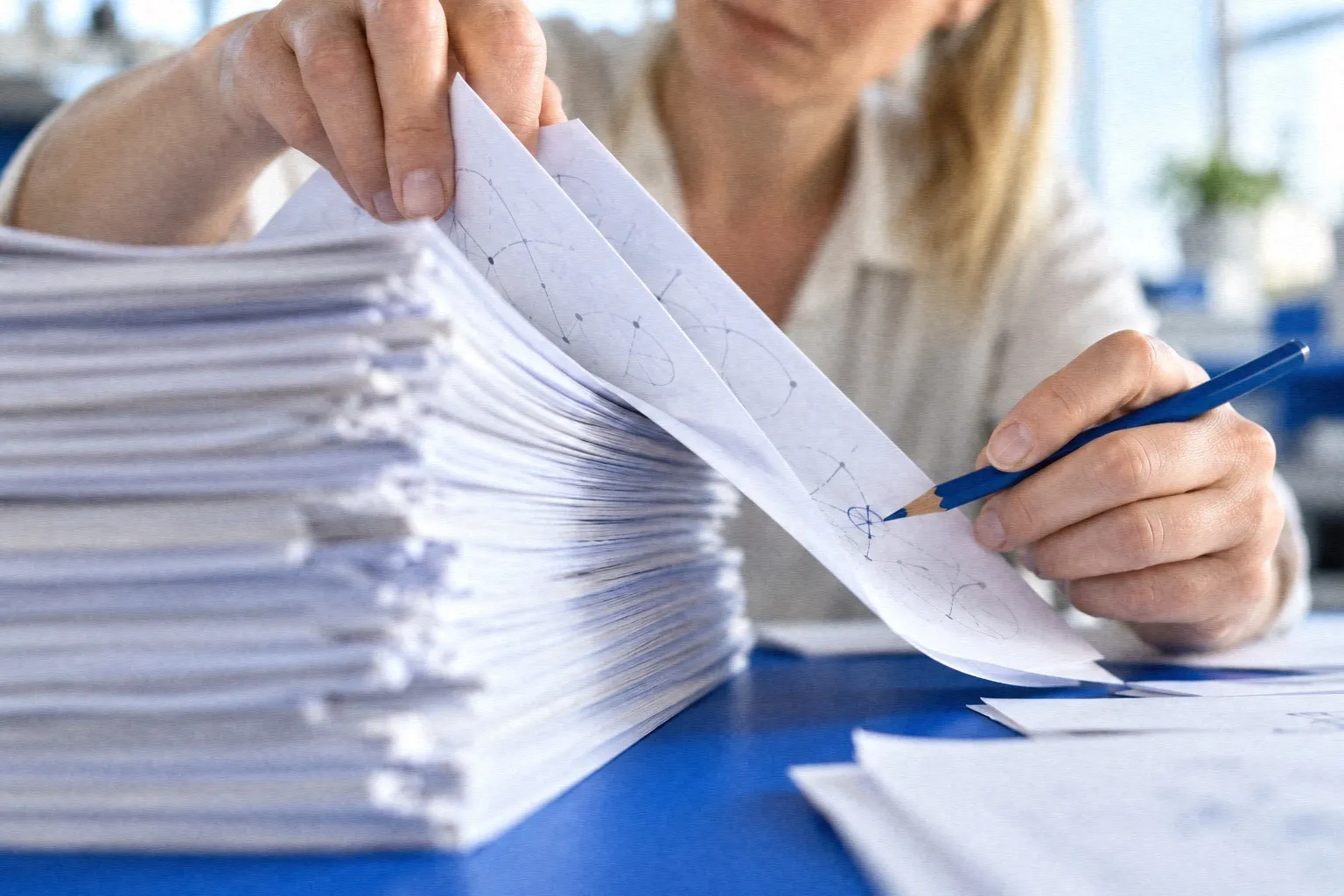
On October 6, 2026, OpenAI posted 722 manuscripts to a public GitHub repository. They cover 372 mathematical problems or families of results. The next day, the company withdrew three of them.
What went wrong
According to Retraction Watch, a sign error invalidated an argument in one manuscript and the construction that two other manuscripts built on. The three papers are titled "Algebraicity of Weil classes on split abelian eightfolds," "Algebraicity of Kuga-Satake Correspondences for K3 Surfaces" and "The rational Hodge conjecture for products of K3 surfaces."
The exact wording of the error comes from secondary accounts of OpenAI's withdrawal notice. According to them, a key argument used +1 as the sign for a geometric operation, where the manuscript's own rules called for -1. This has not been confirmed by reading the notice directly.
At the same time, 14 other manuscripts received corrected proofs. The repository now holds 719 manuscripts spread across 372 families. OpenAI says the errors were found in an internal review.
How the material was made and checked
Most of the manuscripts come from a single internal OpenAI model that has not been made public. According to OpenAI, each result required an average of about three hours of ChatGPT Pro thinking compute, based on roughly 4,000 problems posed.
About 42 percent of the top results have proofs written in Lean. That is a programming language in which a computer can check that a proof holds together. The rest are not machine-verified and, according to OpenAI, may contain errors. The manuscripts have also not been peer reviewed, meaning they have not been examined by independent experts.
The repository preserves version history, so corrections become new versions and earlier releases remain available. According to Retraction Watch, about half of the material was released without confirmation, in line with recommendations from an advisory group.
Mixed reactions
OpenAI writes: "We welcome scrutiny and feedback from the mathematical community. Where errors are identified, we will work to correct them promptly and withdraw papers if no fixes can be found."
According to Retraction Watch, Alex Townsend of Cornell believes OpenAI should have announced the manuscripts verified in Lean first.
Andrew Sutherland of MIT praised the quick response but said mathematicians remain dissatisfied with OpenAI's conduct. He pointed in particular to the September announcement about Navier-Stokes, which prompted more than 8,000 researchers to endorse concerns about premature publication.
The Association for Human Mathematics calls the release of 722 files a "show of force" rather than science and urges mathematicians to stop collaborating with OpenAI.
Sources

Get the week's AI news in your inbox
Choose your level, topics and length. One email a week, unsubscribe at any time.
Subscribe to Promptly Newsletter